



What's Happening?
The North Carolina Department of Environmental Quality’s (DEQ) Division of Coastal Management (DCM) has announced over $1.8 million in grants for fiscal year 2026–27 to 10 communities. These grants are part of the Public Beach and Coastal Waterfront Access
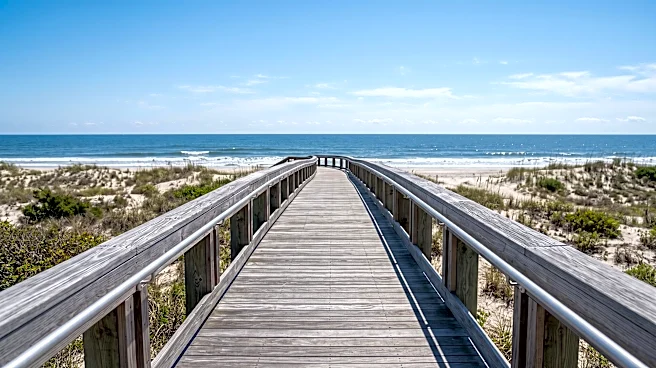
Program, which is celebrating its 45th anniversary. The program aims to expand and improve public access to North Carolina’s beaches and coastal waters. Projects funded include the construction of new boardwalks, improvements to existing dock spaces, land acquisition for new parks, and enhancements for accessibility. For example, the Town of Calabash will receive $300,000 for a new boardwalk at Calabash Waterfront Park, and Dare County will receive $383,000 for land acquisition to create Hatteras Island Park, the first estuarine access park on Hatteras Island. Other projects involve permeable vinyl decking, accessible kayak launches, and ADA-accessible parking and restrooms.
Why It's Important?
These grants are crucial for North Carolina's coastal communities, as they directly support tourism and local economies. By expanding outdoor recreation opportunities and improving public access to natural areas, the projects enhance the quality of life for both residents and visitors. The investment in infrastructure like boardwalks, parks, and accessible facilities ensures that the coast remains a valuable resource for everyone. Furthermore, the focus on accessibility, including ADA-compliant improvements, promotes inclusivity, allowing a broader range of individuals to enjoy coastal environments. The program's longevity, spanning 45 years, underscores a sustained commitment to preserving and enhancing North Carolina's coastal treasures, which are vital for the state's environmental health and economic prosperity.
What's Next?
The awarded communities will proceed with the engineering and construction phases of their respective projects. While the funding for land acquisition in Dare County has been confirmed, a specific timeline for completing the purchase or beginning construction has not been provided. The grant program requires counties to begin developing public water access facilities within five years after closing out the grant contract. DEQ officials recently toured a stormwater management project in Surf City, supported by the Resilient Coastal Communities Program, which uses permeable pavers to manage stormwater and reduce flooding. This indicates a continued focus on both public access and coastal resilience, suggesting future initiatives may integrate these two aspects further.
Beyond the Headlines
The grants highlight a broader trend of state-level investment in environmental infrastructure and public recreation, recognizing the intrinsic value of natural resources. The emphasis on permeable materials and stormwater management in some projects reflects a growing awareness of climate change impacts and the need for resilient coastal communities. By supporting projects that enhance both access and environmental sustainability, the DEQ is fostering a model for responsible coastal development. This approach not only boosts local economies through tourism but also protects delicate ecosystems, ensuring that future generations can continue to enjoy North Carolina's unique coastal environment. The program also serves as a testament to successful partnerships between state agencies and local governments in achieving shared conservation and public welfare goals.