





What's Happening?
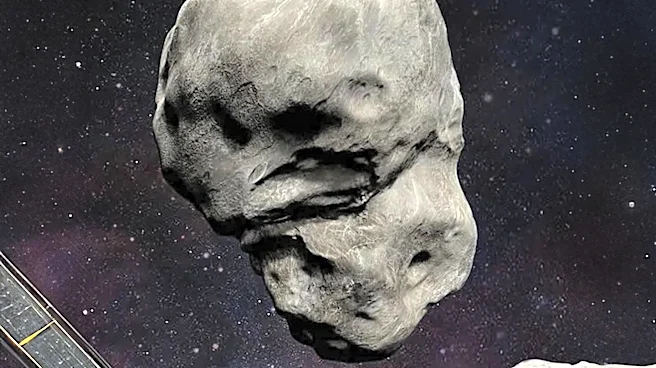
Chinese rocket scientists have developed a new method for deflecting potentially catastrophic asteroids using nuclear devices. The proposed technique involves drilling a hole into the asteroid and burying a nuclear bomb about 30 meters below the surface.
This approach, according to simulations, significantly increases the asteroid's speed change compared to a surface detonation. The study, led by Xiaowei Wang at the China Academy of Launch Vehicle Technology, suggests that this method could be more effective in altering the trajectory of an asteroid, potentially preventing a collision with Earth.
Why It's Important?
The study addresses the critical issue of planetary defense against asteroids, which pose a significant threat to Earth. Traditional methods, such as kinetic deflection, require early detection and long lead times to be effective. The proposed nuclear method offers a last-resort option for large asteroids detected with little warning. This research could influence future international policies and collaborations on space defense strategies. The development of effective asteroid deflection techniques is crucial for global safety and could drive advancements in space technology and international cooperation.
What's Next?
While the study provides a theoretical framework, practical implementation would require further research and development. International discussions on the legal and ethical implications of using nuclear devices in space are likely to follow. The Outer Space Treaty prohibits the placement of nuclear weapons in space, raising questions about the legality of such missions. Future steps may include testing non-nuclear components of the method and developing international protocols for asteroid deflection missions. Continued research and collaboration among space-faring nations will be essential to address these challenges.