





What's Happening?
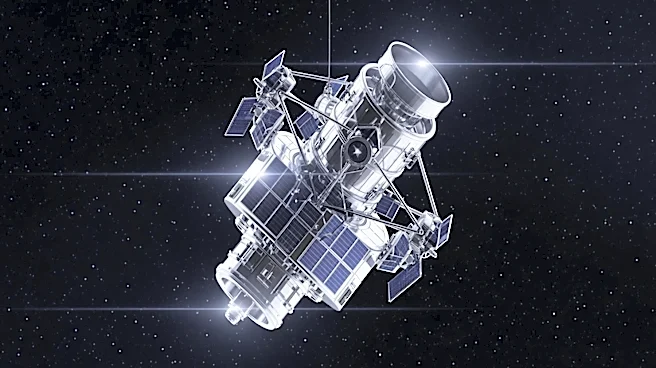
NASA has announced that the Nancy Grace Roman Space Telescope is scheduled to launch on August 30, 2026, eight months ahead of its original schedule. The telescope is currently being prepared for its journey from NASA's Goddard Space Flight Center in Maryland
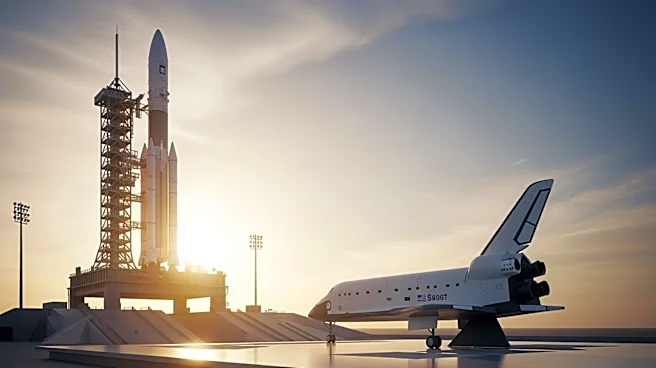
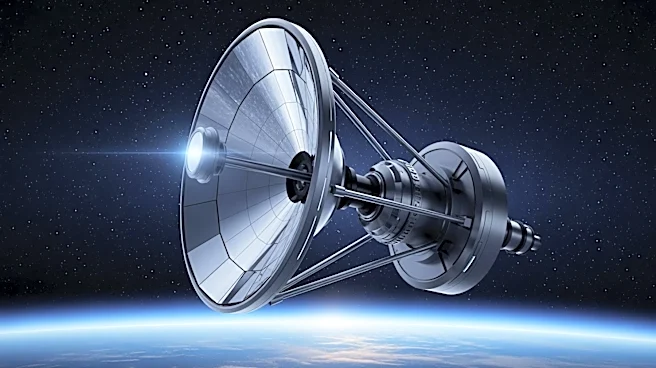
to the Kennedy Space Center in Florida. Once there, it will undergo final inspections and testing before being integrated with a SpaceX Falcon Heavy rocket. The Roman Space Telescope is designed to survey large areas of the sky with its infrared capabilities, aiming to explore dark energy, dark matter, and exoplanets. The mission is expected to provide unprecedented views of the universe, offering new opportunities for astronomical research.
Why It's Important?
The early launch of the Nancy Grace Roman Space Telescope represents a significant advancement in space exploration and astronomical research. By providing high-resolution infrared images, the telescope will enhance our understanding of cosmic phenomena, including the nature of dark energy and dark matter. This mission could lead to groundbreaking discoveries about the universe's structure and the potential for life on other planets. The telescope's data will be invaluable for scientists, potentially influencing future space missions and research priorities. The collaboration with SpaceX also highlights the growing role of private companies in space exploration.
What's Next?
Following its launch, the Roman Space Telescope will travel to the second Sun-Earth Lagrange point (L2), where it will begin its five-year primary mission. Scientists anticipate a wealth of data that will require extensive analysis, potentially leading to new scientific papers and theories. The success of this mission could pave the way for future collaborations between NASA and private space companies, further accelerating advancements in space technology and exploration.