
What's Happening?
Congresswoman Yvette D. Clarke (D-NY) has voiced strong criticism regarding President Trump's 'Joint Commitment on Frontier Responsibilities' for artificial intelligence, which advocates for self-policing
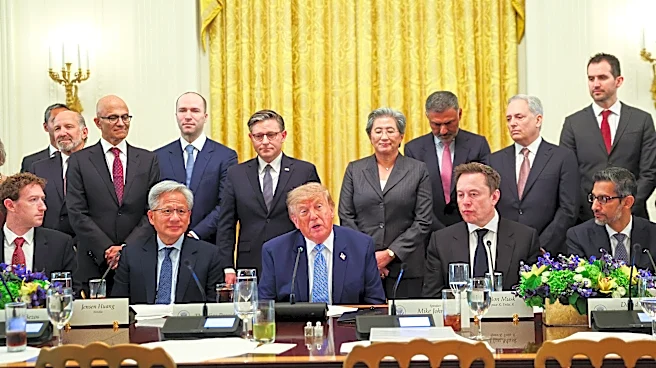
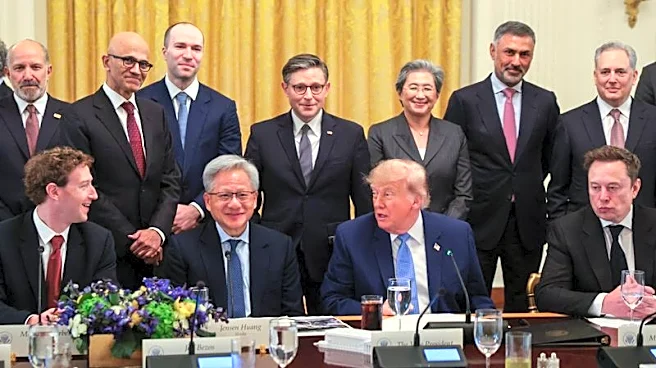
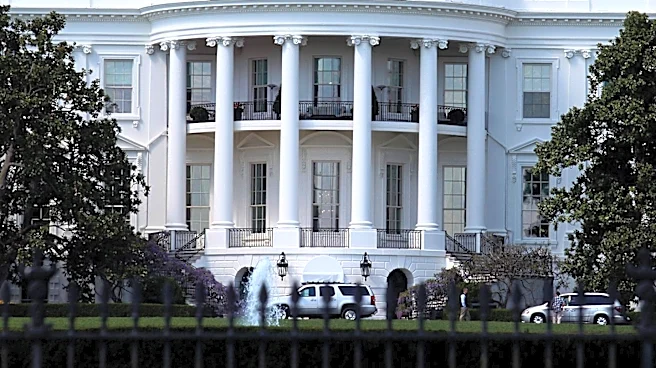
by the AI industry. Following a White House meeting with Big Tech executives, President Trump announced this accord, signed by himself and leaders from major tech companies including Elon Musk, Dario Amodei of Anthropic, Sundar Pichai of Google, Mark Zuckerberg of Meta, Jensen Huang of Nvidia, and Greg Brockman of OpenAI. The agreement outlines 'four layers of controls and audits' for companies developing AI, emphasizing internal monitoring, safeguards, external audits, and independent board oversight. However, Congresswoman Clarke stated that the American people are deeply concerned about unregulated AI and deserve transparent answers, not 'closed-door meetings' and 'promises made and broken in secret.' She, along with other lawmakers and campaigners, is calling for stronger, mandatory AI protections, contrasting with President Trump's view that the industry can effectively self-police.
Why It's Important?
This development highlights a significant divergence in approaches to regulating the rapidly evolving artificial intelligence industry within the U.S. government. President Trump's endorsement of self-policing by tech giants raises concerns among lawmakers like Congresswoman Clarke about accountability, transparency, and the potential for unchecked power within the AI sector. The debate over self-regulation versus mandatory safeguards has profound implications for national security, economic competitiveness, and civil liberties. Without robust external oversight, there is a risk of AI technologies developing in ways that could exacerbate societal inequalities, compromise data privacy, or even pose existential threats, as some experts have warned. The outcome of this debate will shape the future regulatory landscape for AI, influencing how these powerful technologies are developed, deployed, and governed in the United States.
What's Next?
The criticism from Congresswoman Clarke and others suggests that the 'self-policing' AI accord will likely face continued scrutiny and opposition from within Congress and civil society groups. Lawmakers advocating for stronger regulations are expected to push for legislative measures to establish mandatory safeguards and oversight mechanisms for the AI industry. This could lead to a legislative battle over the extent of government intervention in AI development. The tech companies, on the other hand, will likely continue to advocate for flexible, industry-led solutions, emphasizing innovation and rapid development. The ongoing public discourse, expert warnings about AI risks, and potential incidents involving AI technologies will further influence the direction of policy and regulation in this critical sector. The upcoming elections could also play a significant role in determining the future regulatory approach to AI.
Beyond the Headlines
The discussion around AI regulation extends beyond immediate policy concerns to fundamental questions about the nature of technological progress and societal control. The concept of 'super intelligence' and the rapid advancements in AI capabilities raise ethical dilemmas concerning autonomous decision-making, job displacement, and the potential for AI to reshape human society in unforeseen ways. The push for self-regulation by tech companies, while framed as fostering innovation, also touches upon the concentration of power in the hands of a few corporations and the potential for these entities to prioritize profit over public good. Congresswoman Clarke's call for transparency and accountability reflects a broader societal demand for democratic oversight of powerful technologies, ensuring that AI development aligns with public values and serves the interests of all citizens, not just a select few.