



What's Happening?
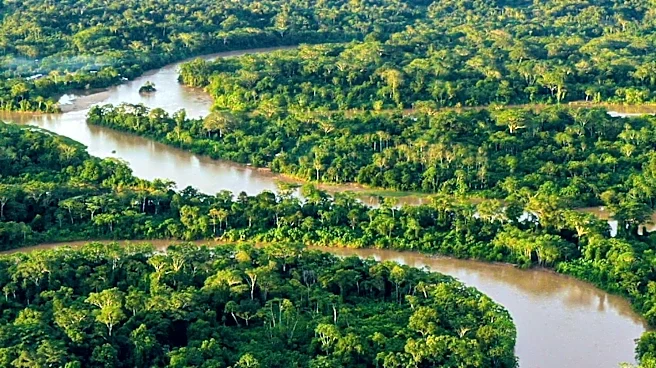
The Amazon rainforest releases vast amounts of moisture into the atmosphere, creating 'flying rivers' that travel thousands of kilometers to provide rainfall to agricultural regions in South America. This process, known as atmospheric moisture recycling,
is crucial for the rainfall in countries like Bolivia, Paraguay, and Argentina. The Amazon's trees transpire between 500 and 1,000 liters of water per day, contributing to a system that rivals the Amazon River in water volume. Deforestation threatens this delicate balance, potentially impacting the agricultural output of these regions.
Why It's Important?
The Amazon's role in regional climate regulation is vital for the agricultural economies of South America. The loss of forest cover could lead to reduced rainfall, affecting crop yields and economic stability. Understanding and preserving this natural system is essential for sustainable development and climate resilience. The concept of 'flying rivers' underscores the interconnectedness of ecosystems and the global impact of local environmental changes.
Beyond the Headlines
The deforestation of the Amazon poses a significant threat to the hydrological cycle that supports agriculture in South America. As forest cover decreases, the risk of reaching a tipping point where the forest can no longer sustain itself increases. This could lead to desertification and economic challenges for countries reliant on agriculture. The situation highlights the need for international cooperation in conservation efforts and sustainable land management practices.