




What's Happening?
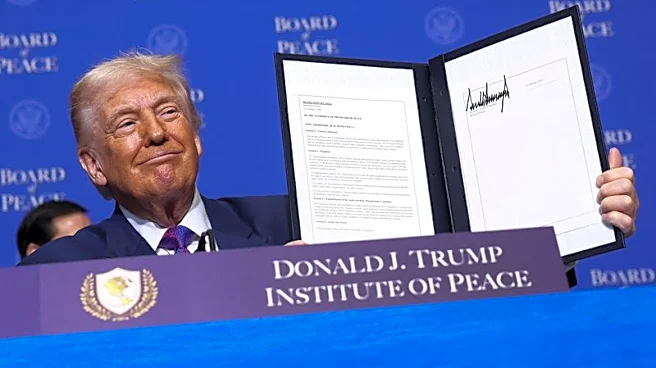
President Trump is advocating for the addition of tariffs on Iran as part of a sanctions bill that targets both Russia and Tehran. This bill, which has garnered bipartisan support, aims to impose economic sanctions on Russia and entities supporting its
military actions in Ukraine. Trump's proposal to include tariffs on Iran is seen as a move to strengthen the U.S. stance against Tehran. In recent weeks, the Trump administration has been active in imposing new tariffs on goods from various countries, including Canada, Brazil, and the European Union, which has led to tensions in international relations. Despite these tensions, Trump remains firm in his belief that tariffs are beneficial.
Why It's Important?
The introduction of tariffs on Iran could further strain U.S.-Iran relations, potentially impacting diplomatic efforts in the Middle East. The move is part of a broader strategy by the Trump administration to exert economic pressure on countries perceived as adversaries. For U.S. businesses and consumers, additional tariffs could lead to increased costs, contributing to inflationary pressures. The proposal also highlights the administration's reliance on tariffs as a tool for foreign policy, which has been a contentious issue domestically and internationally. The potential economic impact on industries reliant on imports from affected countries could be significant, affecting supply chains and pricing.
What's Next?
If Congress approves the inclusion of tariffs on Iran in the sanctions bill, it could lead to retaliatory measures from Tehran, further complicating diplomatic relations. The decision will likely prompt reactions from international allies and trade partners, who may view the move as an escalation in trade tensions. Domestically, businesses and trade groups may lobby against the tariffs, citing potential negative impacts on the economy. The outcome of this legislative process will be closely watched by stakeholders across various sectors, as it could set a precedent for future trade policies under the Trump administration.