






What's Happening?
On September 12, 1991, the residents of Wallace, Idaho, held a funeral for the last stoplight on Interstate 90. This unique event marked the removal of the stoplight, which had been a distinctive feature of the interstate system. The ceremony included
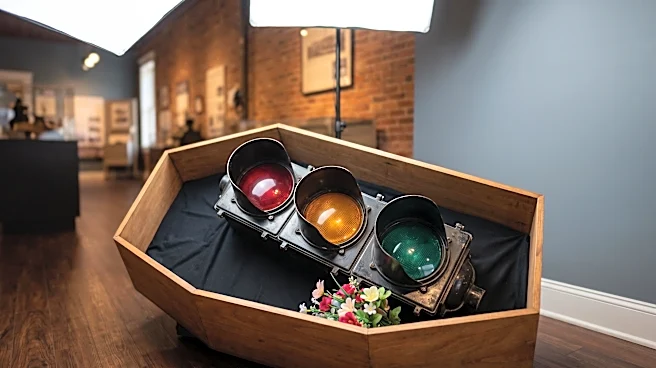
a horse-drawn hearse and bagpipes, symbolizing the town's deep connection to this particular traffic signal. The stoplight had become Wallace's claim to fame, and its retirement was treated with a solemn yet celebratory farewell. Today, the stoplight is preserved in a coffin, adorned with plastic flowers, at the Wallace Mining Museum, serving as a quirky historical artifact.
Why It's Important?
This event is important as it highlights a unique intersection of local identity, historical preservation, and national infrastructure development. The I-90 stoplight in Wallace was an anomaly on the Interstate Highway System, which is designed for uninterrupted travel. Its removal signified the completion of a major bypass project, bringing Wallace in line with the rest of the interstate's design. However, for the town, the stoplight was more than just a traffic device; it was a symbol of their distinctiveness and a point of local pride. The funeral ceremony underscores how communities can imbue everyday objects with significant cultural and historical meaning, especially when those objects represent a unique aspect of their town's character or history.
What's Next?
While the event itself is historical, its legacy continues to shape Wallace, Idaho. The preserved stoplight at the Wallace Mining Museum serves as a permanent reminder of this unique chapter in the town's history, attracting tourists and curious visitors. The town's downtown area, designated as historically significant in 1979, continues to benefit from preservation efforts that were partly spurred by the initial plans for the I-90 bypass. The story of the stoplight contributes to Wallace's identity as a town that values its past and finds creative ways to commemorate its unique heritage, ensuring that this piece of local lore remains a part of its ongoing narrative.
Beyond the Headlines
The funeral for the I-90 stoplight in Wallace, Idaho, delves into deeper themes of community resilience, resistance to change, and the human tendency to find meaning in the mundane. The initial delay in the bypass project, driven by local efforts to preserve the town's historic character, demonstrates a powerful example of grassroots activism influencing major infrastructure decisions. The eventual 'funeral' for the stoplight, rather than a simple removal, reflects a community's way of processing change and maintaining a sense of identity in the face of modernization. It's a testament to how local communities can assert their unique character and values, even when confronted with large-scale national projects like the Interstate Highway System, turning a functional necessity into a cherished piece of local folklore.