

What's Happening?
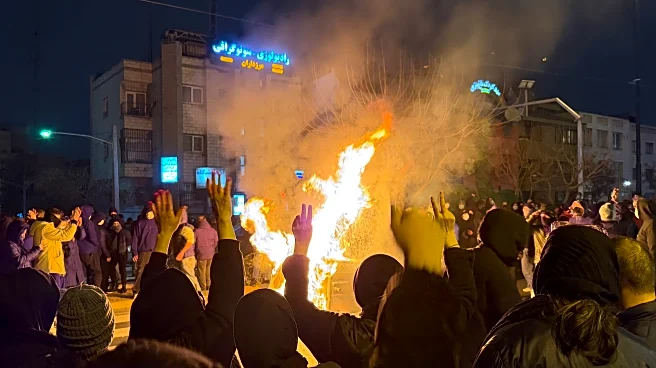
Republican Senator Chuck Grassley has publicly stated that the United States does not want military action in Iran, amidst ongoing protests in the country. These protests, which have spread globally, are in response to economic hardships and government
control, with citizens demanding regime change. The protests have resulted in numerous deaths and arrests, with significant criticism directed at Iran's Supreme Leader, Ayatollah Ali Khamenei. Grassley's comments come as the U.S. Senate recently voted on a war powers resolution aimed at limiting President Trump's ability to use military force without congressional approval. The situation in Iran remains tense, with the potential for further escalation.
Why It's Important?
Senator Grassley's stance reflects a significant viewpoint within the U.S. government that seeks to avoid military conflict with Iran. This position is crucial as it highlights the division within U.S. politics regarding foreign intervention. The ongoing protests in Iran are a critical issue, as they represent a significant challenge to the Iranian regime and could lead to substantial political changes. The U.S. response to these events will have implications for its foreign policy and its role in the Middle East. Additionally, the humanitarian crisis resulting from the protests and government crackdown is a major concern for international human rights organizations.
What's Next?
The U.S. government will likely continue to monitor the situation in Iran closely, with potential diplomatic efforts to address the crisis. The outcome of the Senate's war powers resolution and its impact on President Trump's military authority will be significant in determining the U.S.'s next steps. Internationally, there may be increased pressure on Iran to address the protesters' demands and improve human rights conditions. The situation remains fluid, with the potential for further developments in both domestic and international arenas.