


What's Happening?
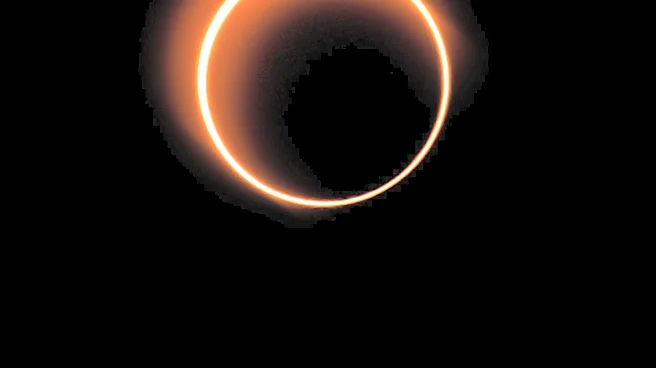
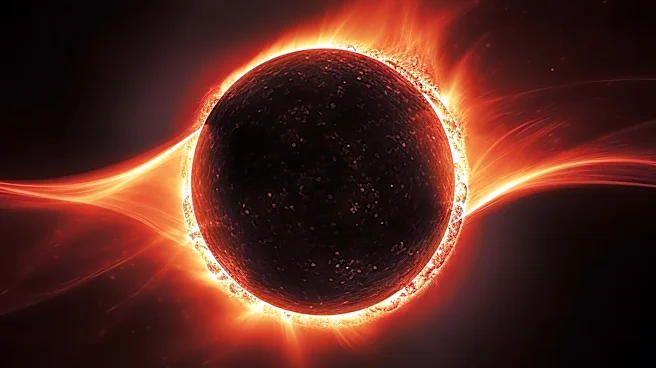
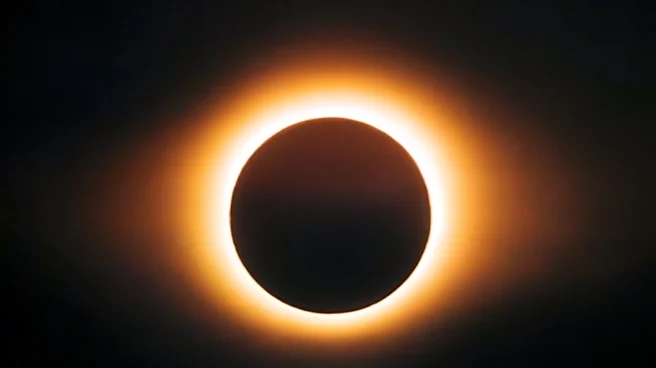
The European Space Agency (ESA) is advancing its efforts to study the solar corona by developing missions that create artificial eclipses. On August 12, 2026, parts of Europe will experience a total solar eclipse, providing a rare opportunity to observe
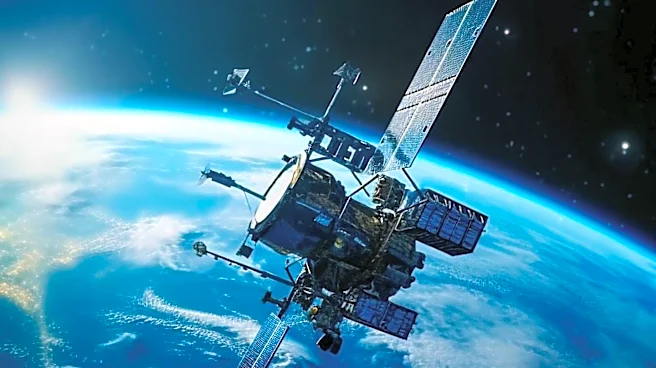
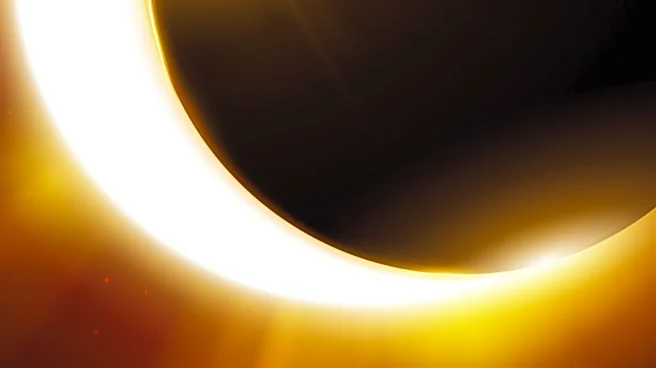
the Sun's corona, which is usually obscured by the Sun's bright disc. To extend the observation window beyond the few minutes offered by natural eclipses, ESA has launched the Proba-3 mission. This mission involves two satellites flying in formation to simulate an eclipse, allowing for extended observation of the solar corona. The Proba-3 mission uses a coronagraph, a telescope with a disc to block the Sun, enabling detailed study of the corona. This technology is crucial for understanding space weather, which can impact satellite networks and communication systems.
Why It's Important?
The ability to study the solar corona is significant for understanding space weather, which originates in this region of the Sun. Space weather can have profound effects on Earth's technological infrastructure, including satellite operations, communication networks, and power grids. By using artificial eclipses, scientists can gather more comprehensive data on the corona, leading to better predictions and preparations for space weather events. The Proba-3 mission, along with other solar observation missions like the Solar Orbiter, enhances our understanding of the Sun's magnetic field and its influence on solar activity. This research is vital for improving the accuracy of space weather forecasts, which are essential for protecting critical infrastructure on Earth.
What's Next?
As the August 12, 2026, total solar eclipse approaches, ESA is preparing for a special observation campaign with the Solar Orbiter mission. This campaign will utilize various remote-sensing instruments to capture detailed images of the solar corona. The data collected will be used to verify computer simulations of the Sun's magnetic environment, providing insights into the accuracy of current models. Additionally, ESA plans to launch the Vigil mission in 2031, which will provide continuous, real-time observations of the Sun's activity. These efforts aim to enhance our understanding of solar phenomena and improve space weather forecasting capabilities.
Beyond the Headlines
The development of artificial eclipse technology by ESA represents a significant advancement in solar research. By enabling extended observation of the solar corona, scientists can explore the complex interactions between the Sun's magnetic field and solar activity. This research has broader implications for understanding the fundamental processes of our solar system and the potential impacts on Earth's environment. The collaboration between different solar missions highlights the importance of international cooperation in advancing space science and technology.