


What's Happening?
The Juneau Assembly has passed a resolution to extend its local emergency declaration concerning the annual glacial outburst flood. This extension, approved without discussion at a recent Assembly meeting, will remain in effect for 180 days, expiring
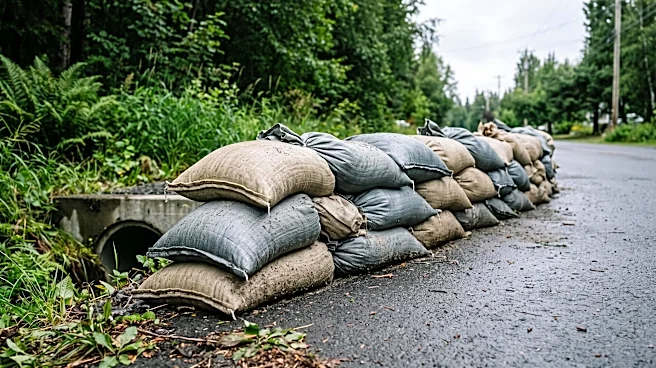
in May. The declaration grants the city access to state assistance and can help streamline permitting processes for flood control projects. Juneau has been under an ongoing emergency status since a catastrophic flood in August 2024, which impacted approximately 300 homes. The previous emergency declaration, issued in June in anticipation of the August 2026 flood, was set to expire in December. Ryan O’Shaughnessy, the city’s emergency manager, presented findings from a survey of 88 Mendenhall Valley residents affected by this summer's flood. Key themes from the survey included a desire for more in-home assistance, such as help with moving furniture and setting up sandbags, and a need for clearer, less jargon-filled public communication. The city is collaborating with disaster aid nonprofits to address these needs.
Why It's Important?
The continued extension of Juneau's emergency declaration highlights the persistent and evolving threat posed by glacial outburst floods to the Mendenhall Valley. This ongoing state of emergency underscores the significant environmental challenges faced by communities in glacial regions, which are increasingly impacted by climate change. For residents, the declaration provides a crucial safety net, ensuring access to resources and support for flood preparedness and recovery. For the city, it facilitates essential flood mitigation efforts and allows for a more agile response to potential future events. The survey results are particularly important as they provide direct feedback from affected residents, enabling the city to refine its emergency response strategies and offer more targeted assistance. This proactive approach to disaster management is vital for protecting lives, property, and the economic stability of the affected areas.
What's Next?
Juneau Mayor Beth Weldon, City Manager Katie Koester, and representatives from the Central Council of the Tlingit & Haida Indian Tribes of Alaska are scheduled to travel to Washington, D.C., to advocate for long-term solutions and continued funding for flood-fighting efforts. This visit indicates a push for federal support and a recognition that local resources alone may not be sufficient to address the scale of the challenge. The city will also continue to work with disaster aid nonprofits to provide the requested in-home assistance to residents. Efforts will be made to improve public communication regarding flood risks and preparedness, making information more accessible and understandable. The ongoing emergency status means that flood control projects and preparedness measures will remain a high priority for the city in the coming months, particularly as the next flood season approaches.
Beyond the Headlines
The recurring glacial outburst floods in Juneau are a tangible manifestation of broader climate change impacts, particularly in Arctic and sub-Arctic regions. This situation forces the community to confront the long-term implications of a changing environment and adapt its infrastructure and policies accordingly. The need for 'in-home assistance' and clearer communication, as highlighted by the resident survey, points to the human dimension of climate adaptation—the need for practical, localized support and effective public engagement. The advocacy trip to Washington, D.C., also underscores the financial burden that climate-related disasters place on local governments and the necessity of federal partnership in building resilience. This ongoing struggle in Juneau serves as a microcosm for how many communities globally will need to adapt to and manage the consequences of a warming planet, requiring sustained investment, innovative solutions, and strong community-government collaboration.