


What's Happening?
Jeff Horowitz, Assistant Federal Security Director for Norfolk and Newport News, has provided insights into the dramatic transformation of air travel security since the September 11, 2001, attacks. Horowitz, who joined the Transportation Security Administration
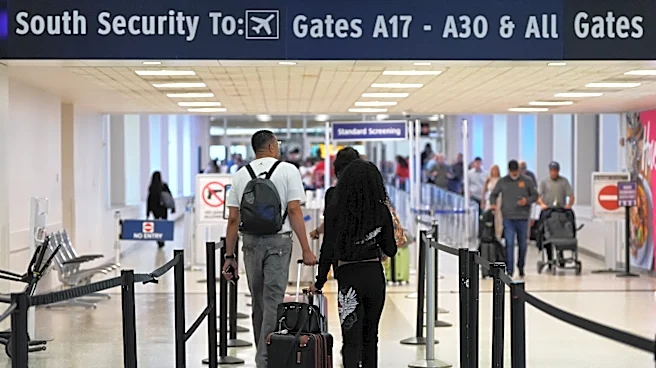
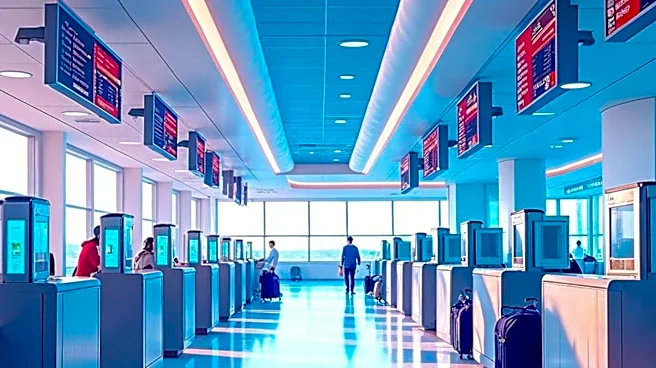
(TSA) in March 2002 as part of its second class of officers, highlighted the shift from minimal pre-9/11 security measures to the current multi-layered system. Before 9/11, security primarily involved physically checking boarding passes and matching IDs, with basic metal detectors. Today, the TSA employs advanced imaging technology capable of detecting organics and anomalies on the body, alongside approximately 20 layers of security, some visible and others covert. Horowitz emphasized that the vetting process now begins the moment a ticket is purchased, with continuous name checks until the time of flight. He also noted that the passenger experience can vary between airports, which is an intentional part of the security strategy. For Horowitz, a former NYPD officer and paramedic who lost friends on 9/11, the work is deeply personal. The changes also include hardened cockpit doors, which are now standard on all aircraft.
Why It's Important?
The evolution of air travel security, as detailed by Jeff Horowitz, underscores a fundamental shift in national security priorities and public expectations in the U.S. The implementation of advanced technologies and multi-layered security protocols by the TSA has significantly altered the passenger experience, trading convenience for enhanced safety. This transformation has had a profound impact on the aviation industry, necessitating substantial investments in equipment, personnel training, and infrastructure. For the public, it has meant adapting to more stringent screening procedures, longer wait times, and a constant awareness of security measures. The personal connection of security personnel like Horowitz to the events of 9/11 highlights the emotional and psychological toll of the attacks, which continues to shape policy and operational decisions. The ongoing adaptation of security measures, including the deliberate variation in airport experiences, reflects a dynamic approach to counter-terrorism, aiming to prevent predictability and maintain an advantage over potential threats. This continuous evolution impacts not only the travel sector but also broader discussions on privacy, civil liberties, and the balance between security and individual freedoms.
What's Next?
The ongoing adaptation of air travel security is expected to continue, driven by evolving threats and technological advancements. Jeff Horowitz's comments suggest a future where security measures remain dynamic and potentially less uniform across all airports, aiming to prevent predictability. Further integration of advanced technologies, such as enhanced biometric screening and artificial intelligence for threat detection, is likely. The TSA will probably continue to refine its '20 layers of security,' with some remaining visible to the public and others operating behind the scenes. There may be continued public discourse regarding the balance between security efficacy, passenger convenience, and privacy concerns, potentially leading to adjustments in policies and procedures. The aviation industry will need to remain agile in adopting new security mandates and integrating them into their operations. Additionally, the personal commitment of security professionals, as exemplified by Horowitz, will likely remain a critical component in maintaining vigilance and adapting to future challenges in air travel safety.
Beyond the Headlines
The transformation of air travel security post-9/11, as described by Jeff Horowitz, extends beyond visible checkpoints and technological upgrades, touching upon deeper societal and psychological implications. The shift from a relatively open travel environment to one characterized by constant vigilance has subtly reshaped the collective psyche of American travelers, fostering a heightened sense of awareness and, for some, anxiety. This pervasive security culture has normalized extensive surveillance and data collection, raising long-term questions about privacy rights and the scope of government oversight in the name of national security. Furthermore, the deliberate variability in airport security experiences, while intended to enhance unpredictability for adversaries, can inadvertently create inconsistencies that challenge public trust and understanding. The personal narratives of individuals like Horowitz, who experienced the trauma of 9/11 firsthand, underscore the profound human element driving these security efforts, yet this emotional impetus can also lead to an enduring 'security at all costs' mentality. This ongoing evolution in air travel security serves as a microcosm for broader debates on how a democratic society balances its fundamental values with the imperative of protection against evolving threats.