








What's Happening?
A new report by the PennEnvironment Research and Policy Center, in collaboration with researchers from the Academy of Natural Sciences of Drexel University, has found microplastics in every water sample taken from 22 waterways within the Delaware River
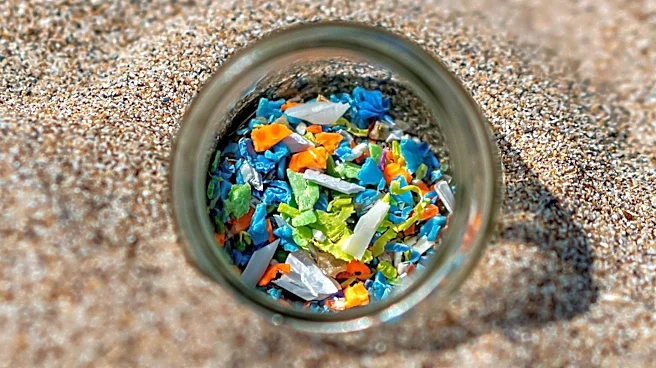
watershed. This includes significant bodies of water such as the Delaware River, the Schuylkill River, and the Brandywine Creek. The study highlights that microplastics are persistent across the entire watershed, affecting areas from the Poconos to the Jersey Shore and the Delaware Bay. The report emphasizes that plastics, which do not biodegrade, break down into smaller microplastic fragments that persist in the environment and accumulate in living organisms. These particles are discharged from industrial facilities and wastewater treatment plants, and also enter waterways through biosolids application on land, stormwater runoff, and improper waste disposal. People can also be exposed to microplastics through plastic bottles, cosmetics, and synthetic clothing.
Why It's Important?
The widespread microplastic contamination in the Delaware River watershed is critically important because this system provides drinking water to 14 million people across New York, New Jersey, Pennsylvania, and Delaware. It also supports thousands of species, from trout to river otters. The presence of microplastics in all tested samples suggests that no waterway in the watershed is free from this contamination, raising significant concerns for public health and environmental integrity. The report underscores the urgent need for a multi-pronged societal approach to address plastic pollution, advocating for changes in how goods are produced and consumed to make them more sustainable. It also calls for holding creators of environmental hazards, like plastic pollution, accountable for the waste they generate. The findings highlight a systemic issue that impacts both human health through potential ingestion and the ecological balance of a vital regional ecosystem.
What's Next?
PennEnvironment is advocating for new legislation to prevent plastics facilities from releasing plastic pellets into waterways through wastewater discharges, leaks, and spills. The organization stresses that reducing plastic production and use is the only effective way to combat plastic pollution and microplastic contamination, given that most plastics placed in recycling bins are not actually recycled and end up in landfills. The findings are expected to prompt increased scrutiny from environmental groups and potentially lead to calls for stricter regulations on plastic manufacturing and waste management. Public awareness campaigns may also intensify, urging consumers to reduce their plastic consumption. The report's implications could influence policy discussions at state and local levels across the four states that rely on the Delaware River watershed for water resources.
Beyond the Headlines
The pervasive presence of microplastics in the Delaware River watershed points to a broader, less visible environmental crisis. Beyond the immediate concerns of water quality and ecosystem health, the study highlights the long-term accumulation of these particles in living organisms, including humans. This raises ethical questions about corporate responsibility in product lifecycle management and the societal burden of waste. The challenge extends beyond simple recycling, revealing the limitations of current waste management systems and the need for fundamental shifts in material science and consumer behavior. The report implicitly calls for a re-evaluation of the 'take-make-dispose' economic model, pushing towards a more circular economy where materials are reused and recycled effectively, and the production of non-biodegradable plastics is significantly curtailed. The invisible nature of microplastic pollution makes it a particularly insidious threat, as its full health and environmental impacts are still being understood.