
What's Happening?
NASA and global observatories have been closely monitoring Comet 3I/ATLAS, the third confirmed interstellar object to pass through our solar system. First observed by the ATLAS telescope on July 1, 2025, this comet has captivated scientists due to its
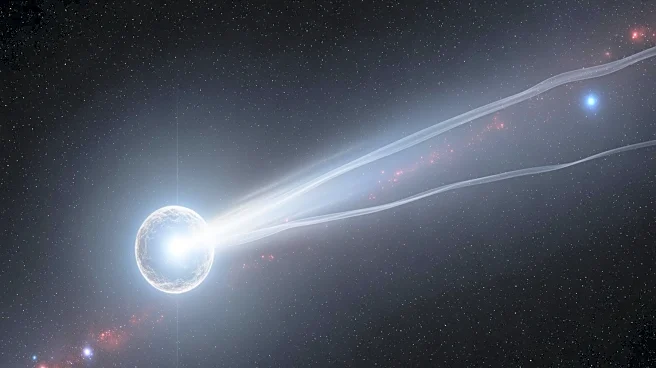
unique features, including a sun-facing anti-tail extending approximately 620,000 miles. The comet's nucleus rotates every 15.5 hours, and it exhibits jet-like outgassing behavior, providing valuable insights into comet physics beyond our solar system. Despite public curiosity, NASA has confirmed that 3I/ATLAS poses no threat to Earth, as it remained about 1.8 astronomical units away during its closest approach on December 19, 2025.
Why It's Important?
The scientific significance of Comet 3I/ATLAS is immense, as interstellar comets offer rare opportunities to test how other planetary systems build icy bodies. This comet's journey provides a unique chance to compare the building blocks of distant worlds with those of our own solar system. The discovery of its anti-tail and jet-like structures within it challenges existing expectations about comet behavior, offering a window into physical processes that may be common in planetary systems across the galaxy. Observations from NASA's Europa Clipper spacecraft have further enriched our understanding of the comet's origin and evolution.
What's Next?
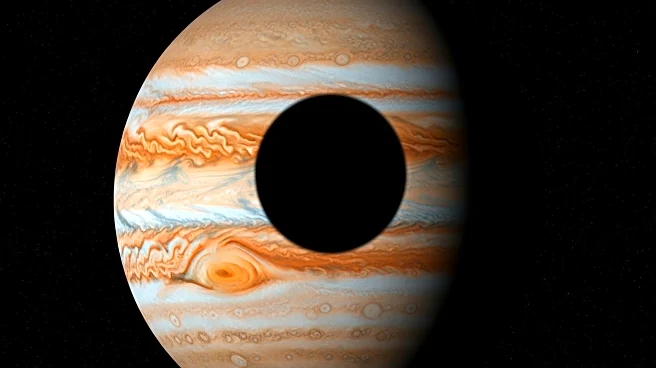
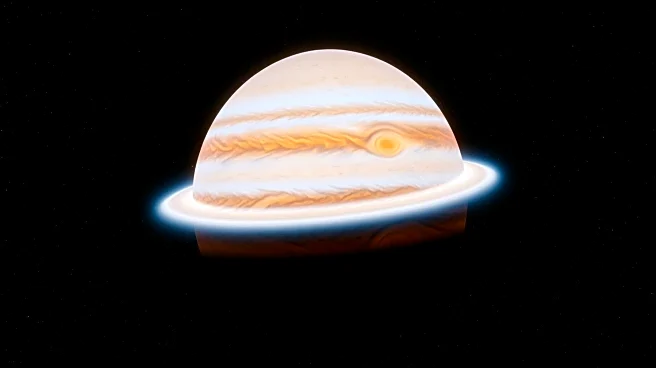
As Comet 3I/ATLAS continues its journey, it is set to pass near Jupiter in March 2026, offering one of the last major opportunities for detailed observation before it moves beyond the reach of powerful instruments. This encounter will allow scientists to gather more data and potentially uncover new insights into interstellar comet behavior. Amateur astronomers can still observe the comet with small telescopes until spring 2026, although its brightness will continue to fade.
Beyond the Headlines
The study of Comet 3I/ATLAS has sparked discussions about the potential for artificial origins, although no evidence of technosignatures has been found. The comet's behavior, while extraordinary, is considered 'normal' for interstellar comets, allowing scientists to compare familiar comet physics with those from other star systems. This research contributes to a broader understanding of the universe and the diversity of planetary systems.