



What's Happening?
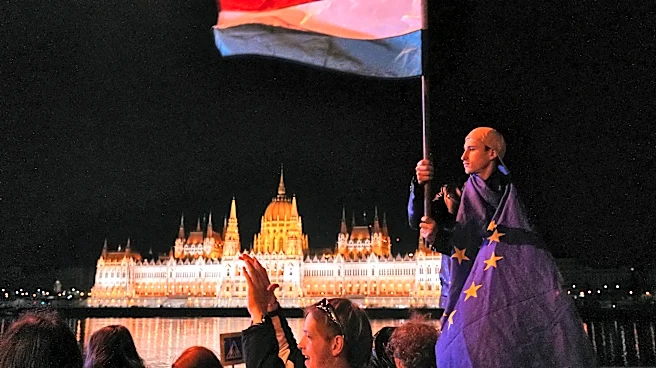
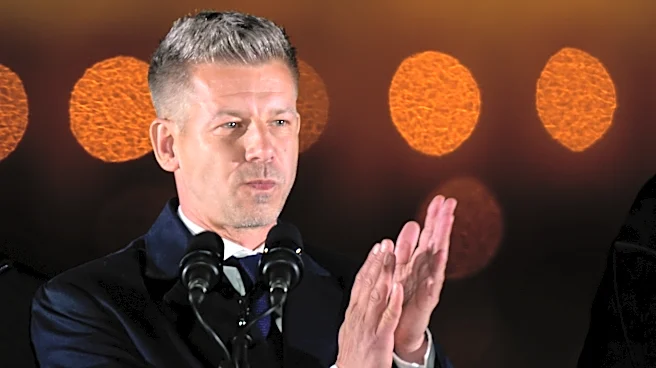
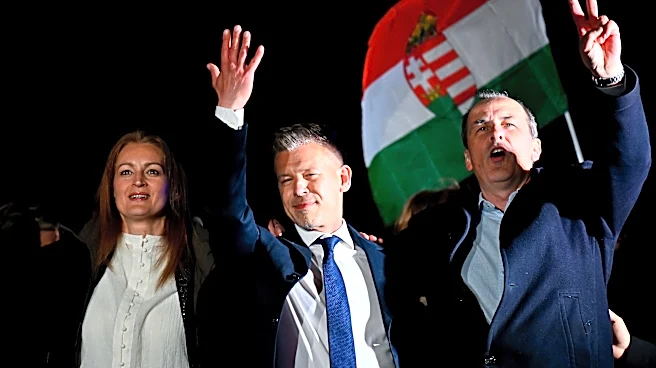
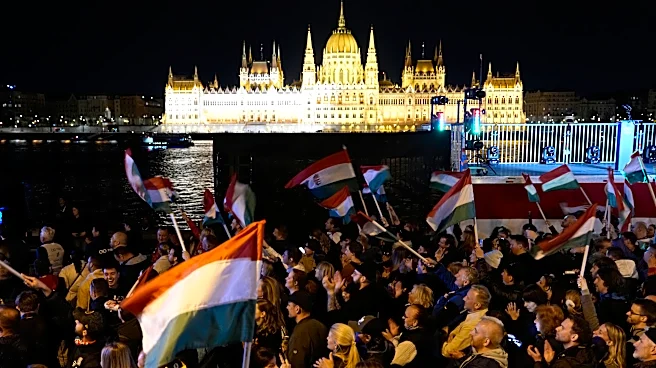
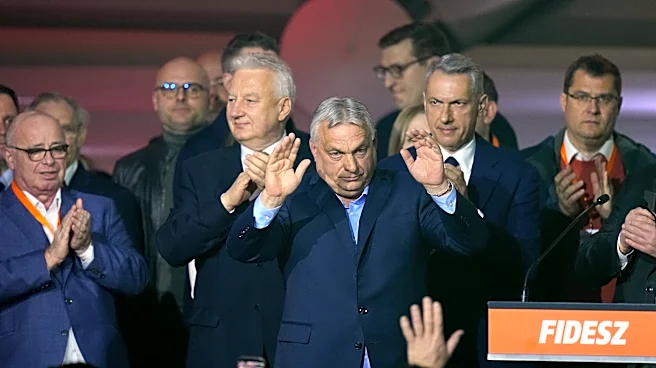
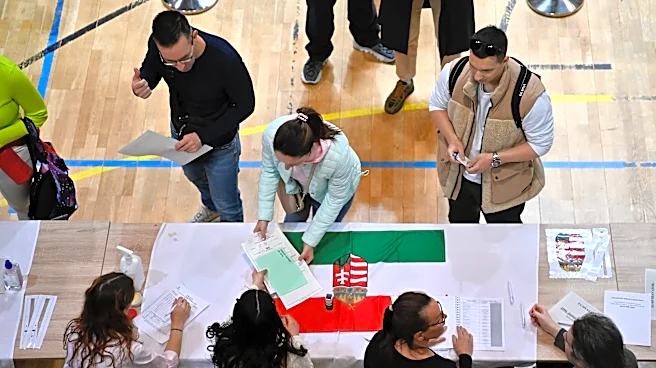
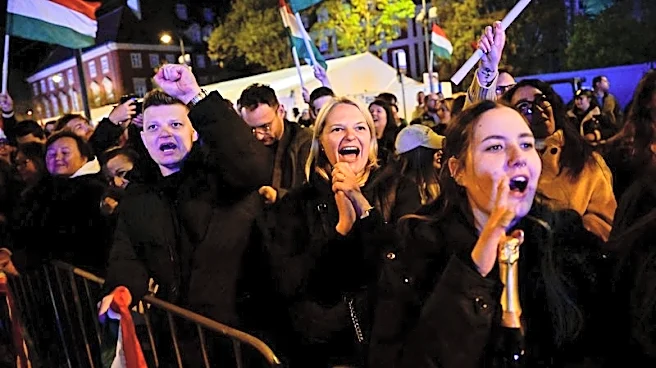
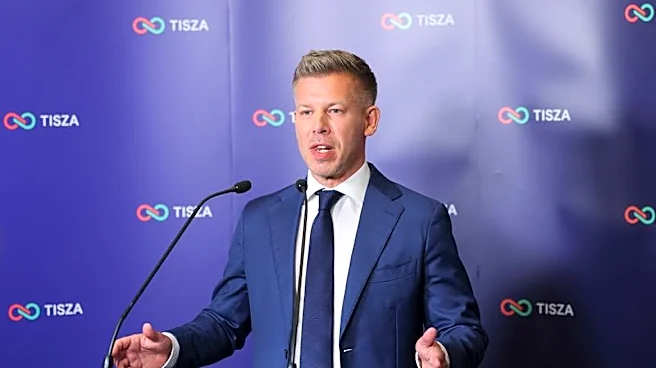
Hungarian opposition leader Péter Magyar announced that his new government could assume power in early May, following a landslide victory in the recent elections. Magyar's center-right Tisza party secured a two-thirds majority, ending Prime Minister Viktor
Orbán's 16-year rule. After a meeting with President Tamás Sulyok, Magyar was assured of his nomination as the next prime minister, with the inaugural parliamentary session likely scheduled for May 6 or 7. Magyar plans to overhaul Hungary's governmental structure, creating separate ministries for health, environmental protection, and education. He also intends to suspend the state broadcaster's news programming until it can operate independently and impartially.
Why It's Important?
This political shift marks a significant change in Hungary's governance, potentially impacting its domestic and international policies. Magyar's victory could lead to a rollback of Orbán's policies, including those related to media control and constitutional changes. The new government's approach to governance and its relationship with the European Union will be closely watched, as Hungary has been a contentious member under Orbán's leadership. The transition could also influence other European countries experiencing similar populist movements.
What's Next?
The new government will focus on implementing its agenda, which includes constitutional changes and addressing corruption. Magyar has called for the current government to act as a caretaker and avoid decisions that could hinder the incoming administration. The international community, particularly the EU, will likely monitor Hungary's political developments closely, assessing the new government's commitment to democratic principles and rule of law.