



What's Happening?
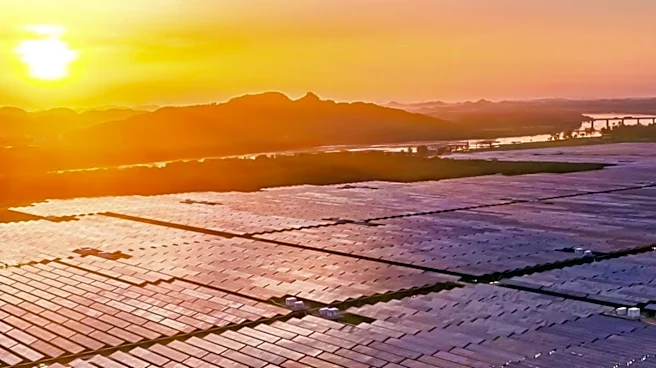
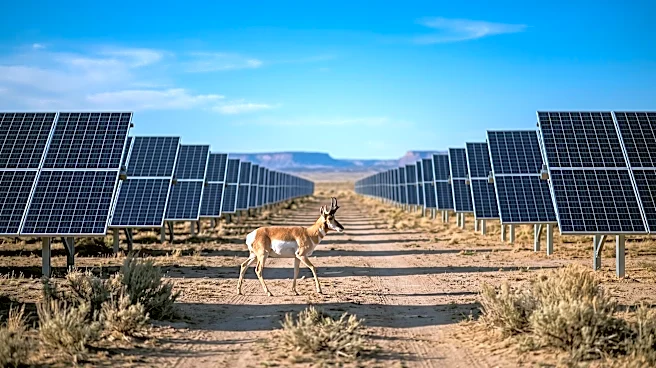
A 1,100-acre, 200-megawatt solar farm in northwestern New Mexico, the San Juan Solar and Storage Project, is demonstrating an unexpected interaction with local pronghorn populations. Contrary to previous studies where solar farms with continuous fencing
caused pronghorn to avoid the area, 75 GPS-collared pronghorn are actively navigating through the San Juan facility. The solar farm, built on the site of a former coal plant, features nine individually fenced arrays with open passages between them. These passages were created due to existing public roads, private land ownership, and natural arroyos, not specifically for wildlife. Researchers from Wildlands Network, supported by a $1.7 million Department of Energy grant, have been tracking the pronghorn since March 2024, collecting over a million GPS locations and five million trail camera photos. Initial findings indicate that pronghorn are utilizing these gaps, with 18 of 30 collared females approaching within 328 feet of the fencing and every passage recording pronghorn traffic. This suggests the animals are treating the industrial site more like a navigable maze than an impenetrable barrier.
Why It's Important?
This development holds significant implications for the future of utility-scale solar energy development in the U.S., particularly in regions inhabited by wildlife like pronghorn. Previous research, such as a study at Wyoming's Sweetwater facility, indicated that continuous fencing led to significant habitat avoidance by pronghorn, extending far beyond the physical footprint of the solar panels. The New Mexico study offers a potential mitigation strategy by demonstrating that incorporating intentional or accidental gaps within solar farm layouts can facilitate wildlife movement. This could reduce the ecological impact of large-scale renewable energy projects, allowing for co-existence rather than displacement. For developers, understanding which passage designs are most effective could lead to more environmentally conscious and potentially less contentious project approvals. Conservationists and policymakers will gain valuable data to inform siting guidelines and environmental impact assessments, potentially balancing energy needs with wildlife preservation more effectively. The study highlights that even unintended design elements can have profound ecological benefits, shifting the paradigm from complete exclusion to managed integration of wildlife within industrial landscapes.
What's Next?
The research team is currently preparing two scientific papers based on their extensive data. The first paper, covering the initial year and a half of data, has been submitted to the journal Ecosphere for peer review. A second paper, specifically focusing on the effectiveness of different passage sizes and shapes for pronghorn movement, is being drafted for submission later in 2026. These publications will provide formal scientific validation and detailed insights into the observed behaviors. If the findings confirm that specific passage designs are effective, this could lead to revised best practices for solar farm construction in pronghorn habitats. Future steps may involve collaboration between solar developers, wildlife biologists, and regulatory bodies to integrate these design principles into permitting processes. The study's ongoing nature will also allow for longer-term observation of pronghorn adaptation and the sustained impact of the solar farm on their behavior and population dynamics, potentially influencing future land use policies for renewable energy infrastructure.
Beyond the Headlines
The San Juan Solar project's accidental success in accommodating pronghorn movement underscores a broader theme in environmental conservation: the potential for unexpected ecological benefits from human infrastructure. While the passages were not designed with wildlife in mind, their existence has provided a natural experiment demonstrating adaptability. This challenges the conventional view that industrial development inherently leads to habitat fragmentation and loss. It suggests that thoughtful, or even serendipitous, design elements can create permeable landscapes that allow wildlife to persist. This case also highlights the importance of long-term, data-driven ecological studies in understanding complex human-wildlife interactions. The findings could influence not only solar energy development but also other large-scale infrastructure projects, encouraging a more integrated approach to land use that considers ecological connectivity. The ethical implication is a shift from simply minimizing harm to actively seeking opportunities for co-existence, recognizing that even in modified landscapes, wildlife can find ways to thrive if given the opportunity.