
What's Happening?
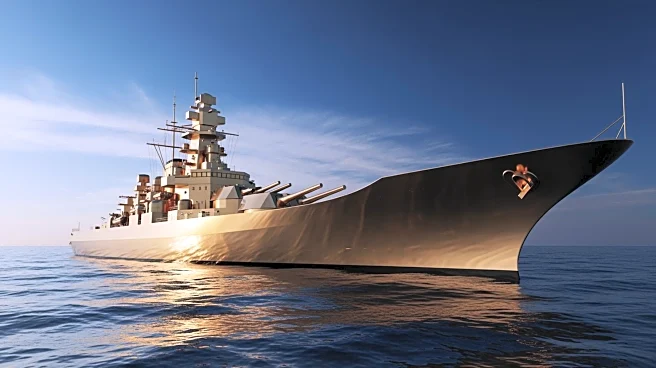
President Donald Trump has unveiled an ambitious plan for the U.S. Navy to construct a new type of warship, which he refers to as a 'battleship', as part of a broader initiative to establish a 'Golden
Fleet'. Announced at his Mar-a-Lago resort, Trump described the proposed ship as being significantly larger and more powerful than the World War II-era Iowa-class battleships. The new vessel is expected to feature advanced technologies such as hypersonic missiles, rail guns, and high-powered lasers, which are still under development by the Navy. This announcement comes after the Navy recently abandoned plans for a new small warship due to delays and cost overruns, opting instead for a modified Coast Guard cutter. Historically, battleships were prominent during World War II but have since been overshadowed by aircraft carriers and long-range missiles. Trump has expressed a preference for older naval technologies, previously advocating for steam-powered catapults over modern electromagnetic systems on aircraft carriers.
Why It's Important?
The introduction of a new class of battleship could significantly impact the U.S. Navy's strategic capabilities and defense posture. If realized, these ships could enhance the Navy's power projection and deterrence capabilities, potentially altering naval warfare dynamics. However, the feasibility of such a project is uncertain given the Navy's recent struggles with cost overruns and delays in shipbuilding. The plan also reflects President Trump's ongoing influence on military procurement and design, emphasizing aesthetics and traditional naval power. This initiative could lead to increased defense spending and influence future naval strategy, affecting defense contractors and military budgets.
What's Next?
The next steps involve the U.S. Navy collaborating with President Trump on the design of the new battleship. This process will likely involve addressing technological challenges associated with the proposed advanced weaponry. The project may face scrutiny from Congress and defense analysts, particularly regarding its cost-effectiveness and strategic necessity. Stakeholders, including defense contractors and military officials, will be closely monitoring developments. The outcome of this initiative could influence future naval procurement policies and the broader defense strategy of the United States.