




What's Happening?
Agriculture Secretary Brooke Rollins has announced a significant hiring initiative by the U.S. Department of Agriculture (USDA) to bolster defenses against the New World screwworm, a dangerous livestock pest. The USDA plans to hire 228 employees for a new
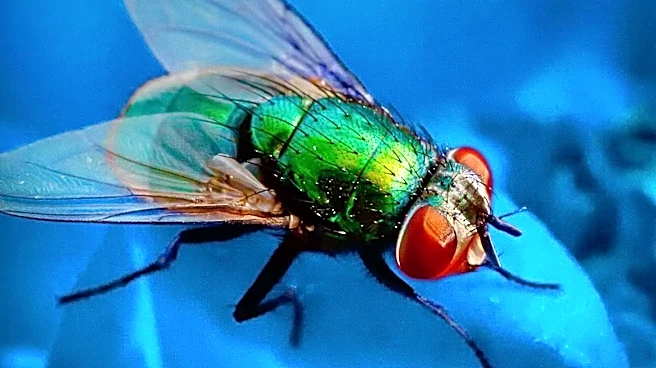
sterile fly production facility located in Edinburg, Texas. This facility is designed to prevent the screwworm from entering the United States, a measure critical for protecting American livestock. Construction of the facility at Moore Air Base is expected to conclude in April 2027, with operations commencing later that year. The facility aims to produce 100 million sterile flies per week initially, with plans to scale up to 300 million. These flies are sterilized through irradiation, a method proven effective in preventing reproduction and safeguarding American herds for decades. Interested applicants can apply via USAJobs.gov or attend a hiring event in McAllen, Texas, scheduled from November 17th to 19th.
Why It's Important?
This hiring push and the establishment of the new sterile fly facility are of paramount importance for the U.S. livestock industry, particularly for states like Iowa with significant cattle and pork production. The New World screwworm poses a severe threat to animal health, and an outbreak could lead to devastating disruptions in the nation's meat supply chain. By proactively strengthening its defense mechanisms, the USDA aims to protect the economic stability of the agricultural sector and ensure food security. The sterile insect technique, which involves releasing sterile male flies to mate with wild females, thereby preventing offspring, has been a cornerstone of screwworm eradication efforts. This investment underscores the government's commitment to safeguarding animal agriculture from foreign pests and diseases, which can have widespread economic and public health consequences.
What's Next?
The immediate next steps involve the USDA's hiring drive, with application opportunities available on USAJobs.gov and a dedicated hiring event in McAllen, Texas, from November 17th to 19th. Following the completion of construction at Moore Air Base in April 2027, the facility will begin its production of sterile flies. The initial target of 100 million sterile flies per week will be crucial for establishing a robust defense perimeter. The subsequent scaling up to 300 million flies per week indicates a long-term strategy to maintain continuous protection against the screwworm. The success of this initiative will be closely monitored by livestock producers and agricultural stakeholders, as it directly impacts the health and economic viability of their operations.
Beyond the Headlines
The USDA's proactive measure against the New World screwworm highlights a broader, often unseen, aspect of national biosecurity and agricultural defense. The use of sterile insect technology represents a sophisticated and environmentally friendly approach to pest control, minimizing reliance on chemical pesticides. This strategy not only protects livestock but also prevents potential ecological disruptions that could arise from widespread pesticide use. Furthermore, the investment in such facilities underscores the continuous need for scientific research and technological innovation in agriculture to address evolving threats. The long-term success of this program could serve as a model for combating other invasive species that threaten U.S. agriculture, demonstrating the critical role of federal agencies in maintaining the integrity of the nation's food systems.