






What's Happening?
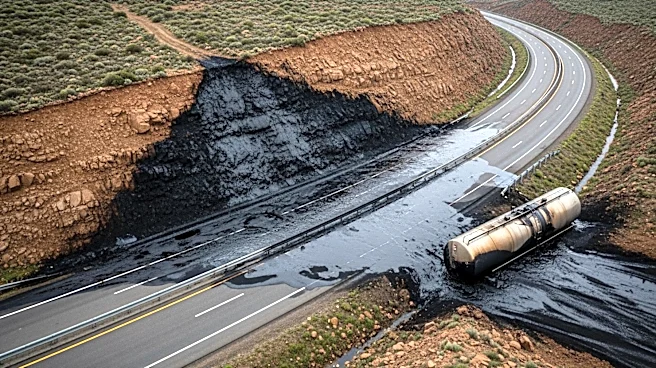
A collision occurred between a passenger train and an oil tanker truck on Highway 6, resulting in an estimated 6,000 gallons of oil spill. The incident took place on Wednesday morning when the train struck the tanker, which was on the tracks. The impact
caused the tanker to split open, spilling its load of hot asphalt tar onto the ground. Six passenger cars and two locomotives were derailed, and the rail line sustained significant damage. The driver of the truck was hospitalized with minor injuries, while no injuries were reported among the train passengers. The Colorado River Fire Rescue assisted approximately 310 passengers and train staff to buses for transportation to their final destinations. Highway 6 was closed for several hours but reopened later in the day, although travel in the area was discouraged as cleanup efforts continued.
Why It's Important?
The collision and subsequent oil spill have significant implications for transportation and environmental safety in the region. The rail line, which is used by both freight trains and Amtrak's California Zephyr route, will be closed for an extended period for repairs, affecting travel and freight operations. The spill of 6,000 gallons of asphalt tar poses environmental risks, although it was mostly contained to the grassy median and did not enter nearby waterways. The incident highlights the challenges of ensuring safety at rail crossings, particularly for large vehicles like tanker trucks. The disruption to the rail line could have economic impacts, affecting both passenger travel and freight logistics in the area.
What's Next?
Union Pacific is leading the repair efforts on the damaged rail line, but the timeline for completion is currently uncertain. The cleanup of the spilled asphalt tar is ongoing, with a contractor hired by the trucking company handling the removal. Authorities will likely investigate the circumstances of the collision to prevent future incidents. The temporary suspension of the California Zephyr route may lead to increased demand for alternative transportation options. Local officials and transportation agencies may review safety protocols at rail crossings to enhance safety measures and prevent similar accidents.