






What's Happening?
The International Monetary Fund (IMF) has approved an immediate disbursement of approximately $138 million to El Salvador. This funding is part of the country's ongoing $1.4 billion Extended Fund Facility (EFF) arrangement. The decision comes after the IMF's
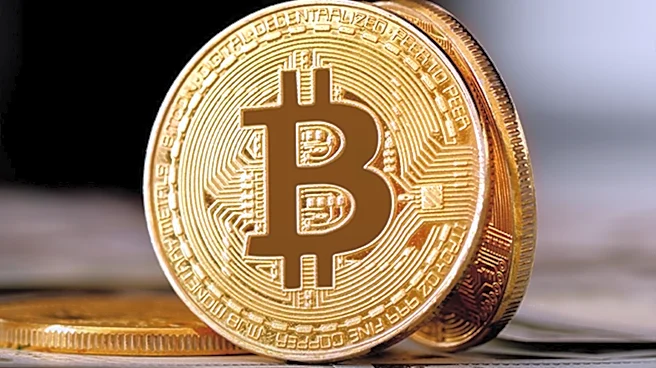
Executive Board completed its second and third reviews of the program. Notably, the IMF granted waivers for certain missed performance criteria, including those related to Bitcoin accumulation. These waivers were issued based on El Salvador's implementation of strong corrective measures and renewed commitments to the program's objectives. The IMF acknowledged El Salvador's progress in several key areas, including financial sector reforms, fiscal transparency, and anti-money laundering/combating the financing of terrorism (AML/CFT) reforms. Furthermore, the government has transferred majority ownership and operational control of the Chivo Bitcoin wallet to a private operator, retaining only a minority stake and custodial responsibilities. The IMF has also stated that no further Bitcoin accumulation is anticipated beyond documented donations, emphasizing a reduction in the state's involvement in Bitcoin-related activities.
Why It's Important?
This disbursement is significant for El Salvador as it provides crucial financial support under its $1.4 billion financing program, helping to stabilize its economy and support ongoing reforms. The IMF's decision to grant waivers despite missed Bitcoin accumulation targets highlights a pragmatic approach, balancing the country's unique cryptocurrency policies with traditional financial stability requirements. For the broader digital asset industry, this development underscores the ongoing tension and negotiation between sovereign nations adopting cryptocurrencies and international financial institutions. It sets a precedent for how the IMF might engage with other countries considering similar crypto-centric economic strategies. The emphasis on reducing state involvement in Bitcoin activities and enhancing transparency in crypto-asset holdings reflects the IMF's continued push for regulatory clarity and risk mitigation in the evolving digital finance landscape. This could influence future policy discussions and regulatory frameworks for cryptocurrencies globally, particularly concerning their integration into national economies.
What's Next?
El Salvador is expected to continue its efforts to reduce state involvement in Bitcoin-related activities, strengthen crypto-asset regulation and governance, and enhance transparency regarding public-sector crypto-asset holdings. The IMF's condition of no further Bitcoin accumulation beyond documented donations will likely guide El Salvador's future cryptocurrency strategy, pushing it towards a more private-sector-led approach for Bitcoin integration. The country will also need to maintain its progress in financial sector reforms, fiscal transparency, and AML/CFT reforms to ensure continued access to the remaining tranches of the $1.4 billion financing program. The transfer of the Chivo Bitcoin wallet's majority ownership to a private operator suggests a shift in the government's direct operational role in the crypto ecosystem. Future reviews by the IMF will likely focus on the sustained implementation of these commitments and the overall impact of these policies on El Salvador's economic stability and financial integrity.
Beyond the Headlines
The IMF's decision to grant waivers to El Salvador, despite its unique stance on Bitcoin, reveals a complex interplay between national sovereignty, economic policy, and international financial governance. While the waivers allow El Salvador to continue receiving vital funding, they also come with explicit conditions that aim to mitigate the risks associated with a national cryptocurrency adoption. This situation highlights the evolving nature of financial systems and the challenges international bodies face in adapting to new technologies like Bitcoin. The push for reduced state involvement in Bitcoin accumulation and increased transparency could be seen as an attempt to de-risk El Salvador's financial system from potential volatility and illicit finance concerns, aligning it more closely with conventional financial norms. This ongoing dialogue between El Salvador and the IMF could serve as a case study for other nations contemplating similar moves, illustrating the potential compromises and adjustments required when integrating novel financial technologies into established global frameworks.