
What's Happening?
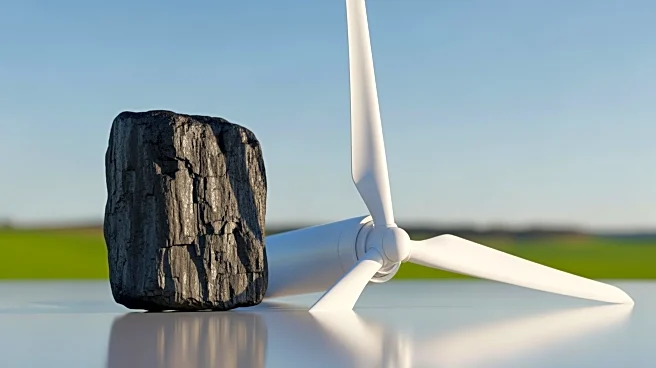
The International Energy Agency (IEA) has released a report indicating that global coal demand has reached a plateau and is expected to decline by 2030. This shift is attributed to increased competition
from renewable energy sources, natural gas, and nuclear power. The report forecasts a slight rise in coal demand by 0.5% in 2025, reaching a record 8.85 billion tonnes, but anticipates a decrease by 2030, returning to 2023 levels. The power sector, which accounts for two-thirds of coal consumption, is seeing a surge in renewable capacity, leading to a projected decline in coal-fired power generation from 2026 onward. In China, the largest consumer of coal, demand is expected to fall slightly by the end of the decade as the country continues to expand its renewable energy capacity. Meanwhile, India is expected to see the largest absolute increase in coal consumption, with demand rising by 3% annually, while Southeast Asia is projected to experience the fastest growth at over 4% per year by 2030.
Why It's Important?
The plateau and anticipated decline in coal demand signify a pivotal shift in global energy consumption patterns, with significant implications for the energy industry and environmental policy. The transition towards renewable energy sources is driven by both environmental concerns and economic factors, as renewable energy becomes more cost-competitive. This shift could lead to reduced greenhouse gas emissions and help countries meet their climate goals. For the coal industry, this trend poses challenges, potentially leading to job losses and economic adjustments in regions dependent on coal mining. Conversely, the renewable energy sector stands to benefit from increased investment and job creation, fostering innovation and technological advancements. The report underscores the importance of strategic planning and investment in renewable infrastructure to ensure a smooth transition and capitalize on the growing demand for sustainable energy solutions.
What's Next?
As coal demand plateaus, energy companies and governments are likely to accelerate investments in renewable energy infrastructure and technology. Policymakers may implement further regulations and incentives to support the transition to cleaner energy sources. The coal industry may need to diversify and explore alternative revenue streams to mitigate the impact of declining demand. Additionally, international cooperation and policy alignment will be crucial in managing the global energy transition and addressing the economic and social challenges associated with it. The IEA's findings may prompt further discussions at international forums and influence future energy policies and climate agreements.
Beyond the Headlines
The transition from coal to renewable energy is not only an environmental and economic issue but also a cultural and social one. Communities reliant on coal mining may face significant changes, requiring support in terms of retraining and economic diversification. The shift also highlights the growing importance of energy security and independence, as countries seek to reduce reliance on fossil fuels and enhance their renewable energy capabilities. Furthermore, the development of renewable energy technologies could lead to new geopolitical dynamics, as countries with abundant renewable resources gain strategic advantages. The IEA's report serves as a reminder of the interconnectedness of energy, environment, and economy, and the need for comprehensive strategies to address these complex challenges.