






What's Happening?
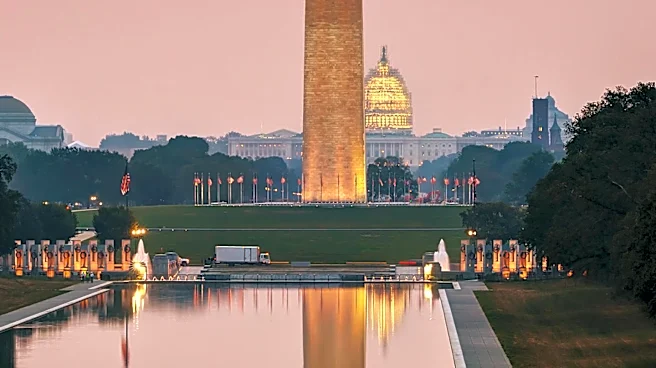
A new temporary installation, The National Military Monument, has been erected on the National Mall in Washington, D.C., offering a unique way to honor U.S. military service members. Sponsored by the United Services Automobile Association (USAA) as part
of the America 250 commemoration, the monument features two towering digital displays resembling American flags. These displays continuously scroll the names of over 41 million U.S. veterans and service members, from the Revolutionary War to the present day. Visitors can scan a QR code to search for specific service members, and USAA staff can then make the chosen name appear prominently on the digital flags, allowing for personal recognition and photo opportunities. An online database, monument250.com, also allows individuals to search records remotely. The monument's stay has been extended through November 12 due to overwhelming public response.
Why It's Important?
This monument holds significant importance for American society by providing a tangible and interactive way to connect with the nation's military history and honor individual service. Unlike many memorials that focus on specific conflicts, this installation recognizes all Americans who have served, fostering a broader sense of appreciation for military contributions across generations. For families, it offers a deeply personal experience, allowing them to see the names of parents, grandparents, and other ancestors displayed in a prominent national space. This can strengthen familial ties to military service and educate younger generations about their heritage. The monument also transforms the abstract statistic of millions of service members into a personal and relatable experience, highlighting the individual sacrifices behind the collective effort. Its interactive nature makes it accessible and engaging, encouraging public participation in honoring veterans.
What's Next?
The monument's extended stay through November 12 indicates its popularity and the public's desire for such a tribute. While the monument is temporary, its success may inspire similar initiatives or permanent installations that offer interactive ways to honor veterans. USAA has confirmed that the database includes names from various national public records, and families unable to find a loved one's name are encouraged to submit information for verification and future inclusion, suggesting an ongoing effort to expand and refine the database. The online component ensures that the experience is not limited to those who can visit Washington, D.C., broadening its reach and impact. The project's success could also lead to discussions about how future national commemorations and memorials can better engage the public and provide more personalized forms of remembrance.
Beyond the Headlines
The National Military Monument taps into a profound cultural need for collective remembrance and individual recognition within the context of national service. In an increasingly digital age, the monument effectively blends traditional memorialization with modern technology, creating an accessible and emotionally resonant experience. It addresses the challenge of honoring a vast number of individuals by making each name visible and searchable, thereby personalizing a monumental historical record. This approach can foster a deeper sense of national unity and gratitude, bridging generational gaps by connecting contemporary citizens with the sacrifices of past and present service members. The monument also subtly encourages civic engagement by prompting reflection on the meaning of service and the responsibilities of citizenship, reinforcing the values of patriotism and community.