







What's Happening?
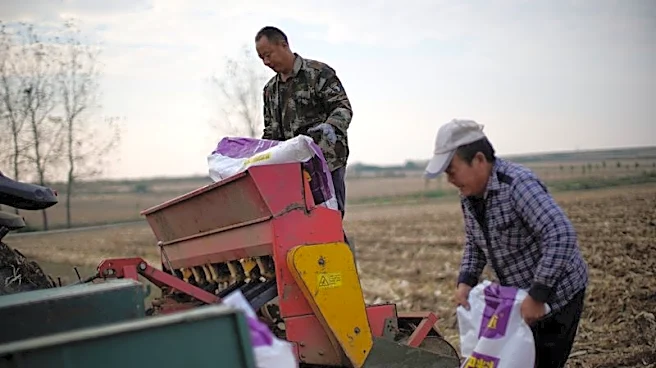
As the United States approaches its 250th anniversary, Hudsonville, Michigan, remains deeply rooted in its agricultural heritage. Known as 'Michigan’s Salad Bowl,' the area has long been recognized for its fertile soil and successful farming of crops
like celery, onions, and lettuce. State Senator Roger Victory, who is also a local farmer, credits Dutch immigrants with transforming the land into productive farmland. Despite urban development pressures, agriculture remains a significant part of Hudsonville's identity. Farms like Post Family Farm have adapted by becoming agritourism destinations, offering activities such as pumpkin patches and educational tours. This evolution reflects a broader trend of farms diversifying to remain viable amidst changing economic and social landscapes.
Why It's Important?
Hudsonville's story highlights the ongoing tension between urban development and agricultural preservation. As cities expand, farmland is often lost, impacting local food production and community identity. The adaptation of farms into agritourism ventures not only preserves agricultural heritage but also educates the public about farming's importance. This shift is crucial for maintaining local economies and cultural identities in rural areas facing urban encroachment. The preservation of agricultural land is vital for food security and environmental sustainability, making Hudsonville's approach a potential model for other communities balancing growth with heritage conservation.
What's Next?
As Hudsonville continues to grow, community leaders and farmers are likely to face ongoing challenges in balancing development with agricultural preservation. Efforts to protect farmland and promote agritourism may increase, potentially involving policy measures to support sustainable development. The community's ability to maintain its agricultural roots while accommodating new residents and businesses will be a key factor in its future identity and economic health. Stakeholders may engage in discussions about zoning laws and incentives for preserving farmland, ensuring that agriculture remains a viable and integral part of Hudsonville's landscape.
Beyond the Headlines
The transformation of Hudsonville's farms into agritourism destinations reflects broader cultural shifts towards experiential and educational tourism. This trend not only supports local economies but also fosters a deeper public appreciation for agriculture and its role in society. As more communities face similar challenges, Hudsonville's experience may offer insights into sustainable development practices that honor historical roots while embracing modern needs. The community's efforts to educate the next generation about farming underscore the importance of agricultural literacy in an increasingly urbanized world.