






What's Happening?
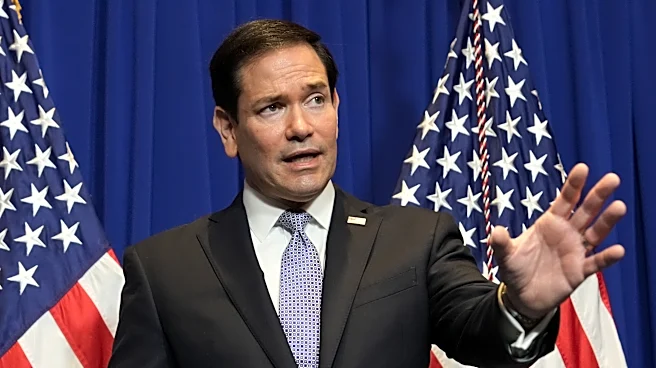
Federal Communications Commission (FCC) Chairman Brendan Carr announced on Wednesday that the agency has secured sufficient votes to approve a final rule that would permit state and local prisons to jam illegal cell phone signals. This measure aims to provide
correctional facilities with a new tool to prevent inmates from coordinating criminal activities from behind bars. The FCC is scheduled to vote on the rule on Thursday. Chairman Carr stated at a press conference in Columbia, South Carolina, that the rule would remove a federal restriction that has previously prevented state and local prisons from deploying cell phone jamming technology. The proposed rule would make the use of this technology optional for correctional facilities, not mandatory.
Why It's Important?
This FCC decision marks a significant shift in prison security policy, addressing long-standing concerns from correctional officials and victims of inmate-orchestrated crimes. The ability to jam illegal cell phone signals could substantially enhance safety within prisons by disrupting communication channels used for drug trafficking, violence, and witness intimidation. For state and local correctional facilities, this rule offers a critical tool to combat illicit activities that undermine security and rehabilitation efforts. However, it also raises considerations regarding the technical implementation to ensure that jamming is precisely targeted to prison grounds, avoiding interference with legitimate wireless signals in surrounding communities. The FCC's move reflects a balancing act between public safety and the broader functionality of wireless networks.
What's Next?
Following the anticipated FCC vote on Thursday, the rule will be finalized, allowing state and local prisons to begin exploring and implementing cell phone jamming technologies. Correctional facilities will need to assess their specific needs, procure appropriate technology, and develop protocols for its deployment and management. The FCC has indicated that safeguards will be included to track jamming equipment and prevent unauthorized use, suggesting ongoing oversight. Wireless carriers and technology providers will likely engage with correctional facilities to offer solutions and ensure compliance with the new regulations. The effectiveness of this new tool will be closely watched, potentially leading to further policy discussions on prison security and technology use.
Beyond the Headlines
The FCC's decision on cell phone jamming in prisons touches upon complex legal and ethical dimensions. While enhancing security, it also raises questions about potential unintended consequences, such as interference with legitimate communications of prison staff or nearby residents, despite assurances of improved technology. There are also broader implications for inmate rights and access to communication, although the focus here is on illegal usage. This move could set a precedent for how federal agencies address technological challenges in secure environments, potentially influencing future policies on signal control in other sensitive areas. The debate also highlights the persistent challenge of contraband in correctional facilities and the continuous technological arms race between inmates and security measures.