



What's Happening?
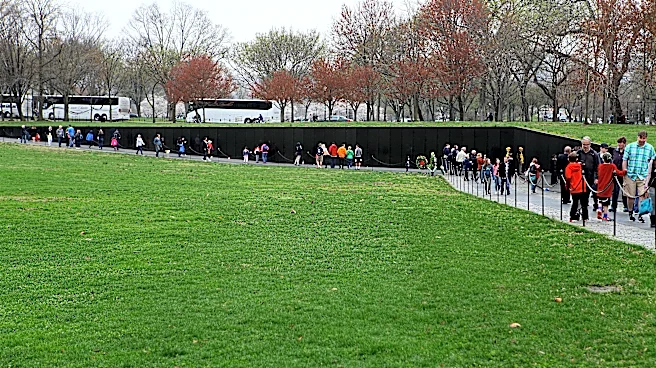
A 360-foot-long, 8-foot-tall replica of the Vietnam War memorial wall was brought to Cupertino, California, providing a sense of closure for local veterans. Dennis Whittaker, an 80-year-old veteran who served as a platoon leader in Vietnam, spearheaded
the effort to bring the wall to his home city. He raised $13,500 for the installation of the traveling wall, which is an 80% replica of the original in Washington D.C. The wall lists the names of 58,220 U.S. soldiers who died serving in the Vietnam War. Whittaker, who lost three teammates in a mission, expressed that seeing their names etched on the wall brought him peace. This marks the first time Cupertino has hosted the traveling memorial in approximately 15 years. Arturo Thiele-Sardina, finance officer for American Legion Post 642, which sponsored the wall, highlighted the memorial's role in reminding people of the human cost of freedom.
Why It's Important?
The presence of the traveling Vietnam War memorial wall in Cupertino underscores the ongoing need for recognition and healing among Vietnam War veterans in the U.S. With an estimated six million Vietnam War veterans alive today, and nearly 40,000 residing in Santa Clara County alone, these memorials serve as crucial spaces for remembrance and processing past traumas. The initiative by veterans like Dennis Whittaker highlights a community-led effort to honor those who served and to acknowledge the profound sacrifices made. The memorial also brings attention to the 'invisible wounds' of post-traumatic stress disorder, emphasizing the long-term care and support owed to veterans. This event reflects a broader societal shift in how Vietnam veterans are perceived and treated, moving from a period of being shunned to one of greater appreciation and support, as noted by Thiele-Sardina.
What's Next?
The traveling Vietnam Memorial Wall was installed at Cupertino Memorial Park and was scheduled to be taken down after 11:30 a.m. on Saturday. While the physical presence of this specific replica is temporary, the impact on the veterans and the community is expected to be lasting. The event may inspire further local initiatives to support veterans and commemorate their service. Discussions around veteran care, particularly for issues like homelessness and PTSD, are likely to continue. Organizations like American Legion Post 642 will likely persist in their advocacy and support for veterans, working with local communities to address ongoing needs. The success of bringing this memorial to Cupertino could also encourage other communities with significant veteran populations to host similar events, fostering a wider sense of national remembrance and gratitude.
Beyond the Headlines
The act of bringing the Vietnam War memorial wall to Cupertino transcends a simple commemorative event; it delves into the profound psychological and social dimensions of war and its aftermath. For veterans like Dennis Whittaker, the wall is not just a list of names but a tangible connection to fallen comrades, offering a unique form of closure that personalizes the immense scale of loss. The emphasis on 'invisible wounds' like PTSD highlights the evolving understanding of military service's impact, moving beyond physical injuries to encompass mental health. This event also reflects a cultural re-evaluation of the Vietnam War era, acknowledging the complex reception veterans faced upon their return and the subsequent efforts to rectify past societal failings. The community's engagement with the wall serves as a powerful reminder of collective memory, the importance of historical reconciliation, and the enduring responsibility to those who have served the nation.