



What's Happening?
Eclipses have long fascinated humanity, serving as both omens and opportunities for scientific discovery. Historically, they have been interpreted as signs of divine displeasure or cosmic events. Modern science, however, views eclipses as valuable opportunities to study
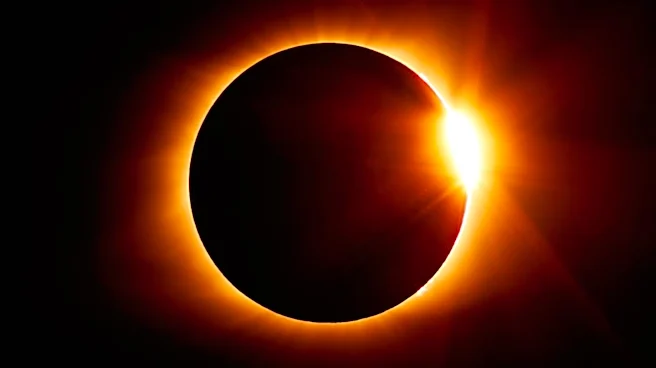
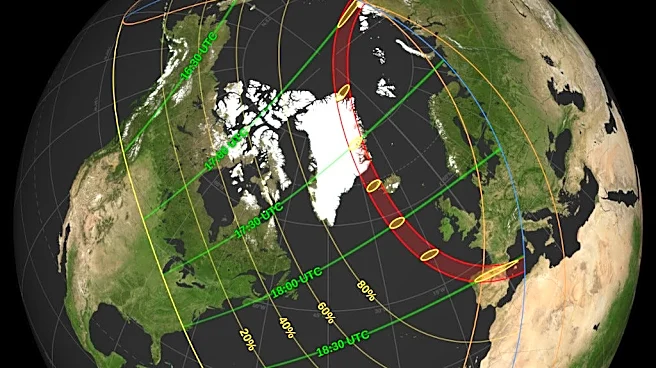
celestial mechanics and the Sun's structure. The upcoming total solar eclipse in Europe is anticipated to provide insights into the solar corona and space weather phenomena. Additionally, researchers are interested in the behavioral responses of animals and humans during eclipses, with studies planned to observe changes in animal activity and human emotional responses.
Why It's Important?
Eclipses offer unique opportunities to advance scientific understanding of the Sun and its effects on Earth. Observations made during eclipses have historically led to significant discoveries, such as the confirmation of Einstein's theory of general relativity. The upcoming eclipse will allow scientists to gather data that could improve our understanding of solar phenomena and their impact on Earth's environment. Additionally, studying animal and human responses to eclipses can provide insights into behavioral science and the effects of environmental changes on living organisms.
What's Next?
Scientists and researchers will position themselves along the eclipse's path to collect data and images. The findings from these observations could lead to new scientific papers and advancements in our understanding of solar and environmental sciences. The data collected on animal and human behavior during the eclipse will be analyzed to explore the effects of sudden environmental changes. These studies may inform future research on light pollution and its impact on ecosystems.