
What's Happening?
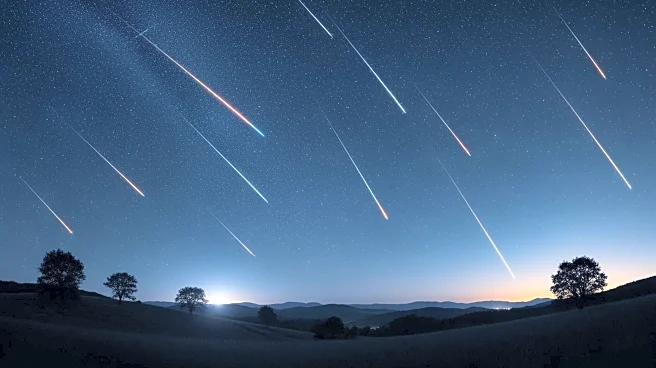
The Perseids meteor shower, a highlight of the astronomical calendar, will be active from July 17 to August 23, 2025. The peak viewing period is expected on August 12-13, when observers can see between
50 to 100 meteors per hour. This meteor shower is caused by Earth passing through debris left by comet 109P/Swift-Tuttle, which orbits the sun every 133 years. The Perseids are known for their fireballs, which are brighter and last longer than typical meteors due to larger particles of cometary material. The best time to view the shower is before dawn, and viewers are advised to find dark locations away from city lights.
Why It's Important?
The Perseids meteor shower is a major event for both amateur and professional astronomers, offering a chance to observe and study meteors in a natural setting. It serves as an educational tool, promoting interest in space and science among the general public. The event's timing during the summer months makes it accessible to a wide audience, potentially increasing public engagement with astronomy. The shower also provides an opportunity for scientific data collection and analysis, contributing to our understanding of cometary debris and its interaction with Earth's atmosphere.
What's Next?
As the peak of the Perseids approaches, observers are encouraged to prepare by selecting optimal viewing locations and times. The moon will be in a Waning Gibbous phase, which may affect visibility due to its brightness. Sky watchers should allow their eyes to adjust to the darkness and hope for clear skies to maximize their viewing experience. Organizations like NASA may provide additional resources and updates as the event progresses, helping enthusiasts make the most of this celestial display.