






What's Happening?
U.S. Secretary of the Interior Doug Burgum recently visited a Fervo Energy geothermal operation in Milford, Utah, marking his first visit to such a site as a cabinet member. Fervo Energy is pioneering a new type of power plant that utilizes hydraulic
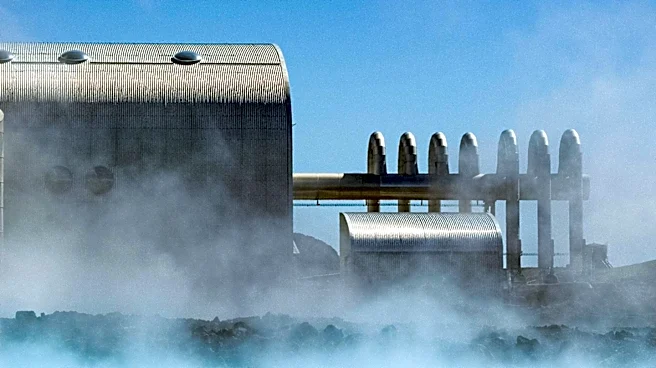
fracking techniques to extract heat from the earth, aiming to provide large-scale geothermal energy. The Cape Station plant, located on federal land, delivered its first electricity last month, with Google already purchasing approximately 400 megawatts and considering an increase to a gigawatt by 2030. This development aligns with President Trump's energy dominance agenda, which Burgum described as focusing on energy abundance, reliability, affordability, and security. The Fervo Energy project in Milford is projected to potentially produce up to eight gigawatts, which could power a significant portion of Utah's energy needs.
Why It's Important?
This visit highlights the U.S. government's interest in advanced geothermal technology as a component of its energy strategy. The Fervo Energy project demonstrates a potential shift in how geothermal energy is harnessed, moving beyond reliance on natural hot springs to actively creating the conditions for heat extraction. This could significantly expand the geographic viability of geothermal power, offering a consistent, 24/7 energy source that is not dependent on weather conditions like solar or wind. The involvement of major tech companies like Google, which plans to power a new data center directly from Fervo, underscores the growing demand for reliable and sustainable energy for high-consumption industries. If scalable and cost-effective, this technology could reduce reliance on fossil fuels, contribute to energy independence, and create economic opportunities in regions like Milford, Utah, which has historically faced economic decline.
What's Next?
The future of this enhanced geothermal technology hinges on its ability to scale up and become cost-competitive with other energy sources. While current estimates suggest geothermal is becoming more affordable, ongoing operational data will be crucial to address any concerns, particularly regarding water usage and seismic activity. The success of Fervo Energy's Cape Station could serve as a model for similar projects across the U.S., potentially attracting further investment and development in geothermal energy. Continued government support, as evidenced by Secretary Burgum's visit, could also play a role in accelerating the adoption of these technologies. The economic revitalization of towns like Milford, driven by new energy projects and associated industries, will be a key indicator of the broader impact of such initiatives.
Beyond the Headlines
The development of advanced geothermal energy, particularly through techniques similar to fracking, raises broader discussions about environmental impact and resource management. While Fervo Energy claims a closed-loop system for water usage, minimizing consumption in a water-stressed state like Utah, public scrutiny and long-term monitoring will be essential. The potential for induced seismicity, though reportedly minor in this instance, is another aspect that requires careful consideration and transparent communication. This technological advancement also prompts a re-evaluation of what constitutes 'clean' or 'sustainable' energy, as it leverages techniques traditionally associated with fossil fuel extraction for renewable purposes. The integration of such energy sources with the demands of the digital economy, as seen with Google's interest, points to a future where energy infrastructure and technological growth are increasingly intertwined.