







What's Happening?
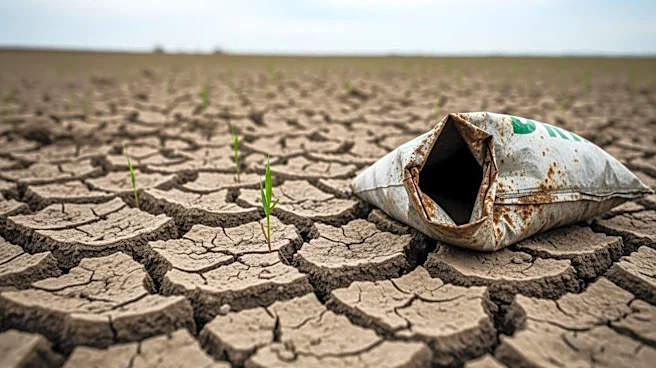
The ongoing conflict in Iran has led to a significant disruption in the global fertiliser supply, primarily due to the blockade of the Strait of Hormuz. This has resulted in a 'fertiliser squeeze,' with soaring energy costs and export disruptions pushing
farmers' affordability to a four-year low. The World Bank has reported that the surge in costs is largely driven by a spike in natural gas prices, which are crucial for nitrogen-based fertilisers. European agriculture ministers are calling for urgent intervention to prevent a prolonged food price crisis and to safeguard future grain harvests. Despite Europe not facing an immediate supply issue, there is concern about future crops due to the complex environment and tight margins faced by farmers.
Why It's Important?
The fertiliser crisis has significant implications for global food security, particularly affecting regions like Asia and the Global South, where shortages are already causing elevated costs and reduced availability. The Food and Agriculture Organisation of the United Nations (FAO) has highlighted that countries such as India, Bangladesh, and various parts of Sub-Saharan Africa are experiencing severe impacts. The crisis could lead to lower harvests in the coming seasons, exacerbating poverty and food insecurity. For Europe, the high cost of production inputs threatens next year's crop yields, necessitating immediate and coordinated action to stabilize the market and support domestic producers.
What's Next?
European agriculture ministers are advocating for strategies to secure fertiliser supplies and mitigate the impact of high energy prices on the agricultural sector. There is a call for the European Commission to recognize the fertiliser industry as a strategic pillar of the EU's autonomy. Without stabilizing energy markets and restoring fertiliser supply chains, the effects of the Iran war could lead to a persistent cycle of high prices and low supply, disproportionately affecting food-insecure regions. The upcoming Fertiliser Action Plan is expected to address these challenges and ensure long-term food security.