

What's Happening?
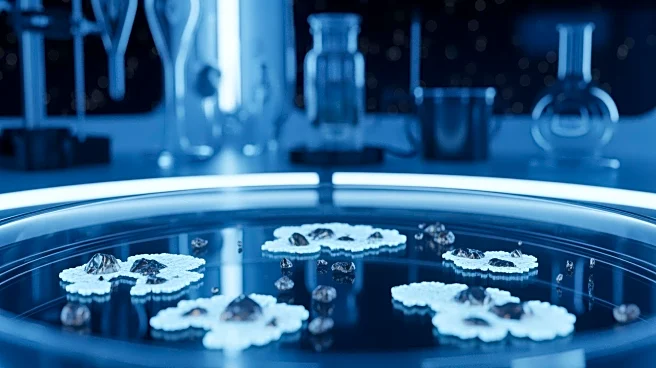
Researchers have discovered that Asgard archaea, ancient microbes closely related to eukaryotes, may have used oxygen long before it was abundant on Earth. This finding, based on a genetic survey of ocean mud and seawater, suggests that these microbes had
the molecular machinery to handle and possibly convert oxygen into energy. The study, published in Nature, challenges previous assumptions that Asgard archaea thrived only in oxygen-poor environments. The research indicates that these microbes, which include groups like Lokiarchaeota and Thorarchaeota, may have played a crucial role in the evolution of complex life by adapting to oxygen-rich environments.
Why It's Important?
This discovery provides new insights into one of biology's most significant evolutionary events: the emergence of complex life. Understanding how Asgard archaea adapted to oxygen could explain how early eukaryotic cells, which require oxygen for energy production, evolved. This research could reshape our understanding of the evolutionary timeline and the conditions that led to the rise of complex organisms. It also highlights the potential for ancient microbes to adapt to changing environments, offering lessons for current biodiversity and climate challenges.
What's Next?
Further research will focus on exploring the genetic and metabolic pathways that enabled Asgard archaea to utilize oxygen. Scientists aim to uncover more about the evolutionary relationship between these microbes and eukaryotes. This could involve deeper genetic analysis and environmental studies to trace the evolutionary history of oxygen tolerance. The findings may also inspire new biotechnological applications, leveraging the unique metabolic capabilities of these ancient microbes.