







What's Happening?
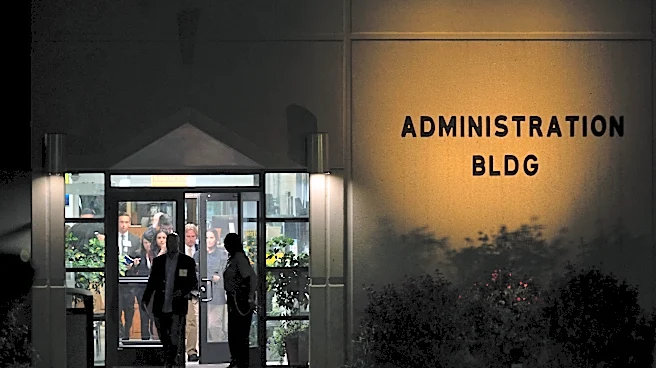
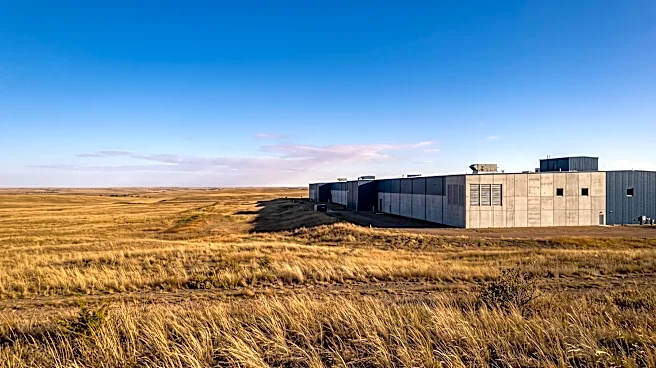
The relocation of inmates to South Dakota's recently opened women's prison in Rapid City is progressing slowly, with 79 women housed there by the end of September, its first month of operation. This new $87 million facility, designed with 288 beds, was
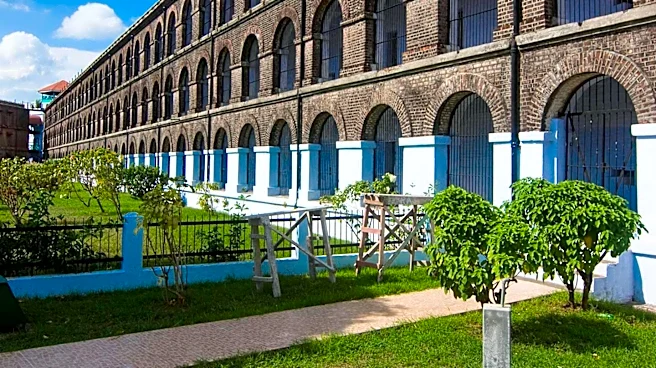
constructed to alleviate overcrowding at the older women's prison campus in Pierre. Despite the new facility, 466 women remain in secure facilities in Pierre, including 64 at the Hughes County Jail and 208 in a minimum-security unit that state engineers have deemed unfit for human habitation due to structural deficiencies. Department of Corrections spokesperson Michael Winder stated that the population in Rapid City will grow as operations ramp up, and the minimum-security unit in Pierre is intended for demolition once it is no longer needed, though a timeline is not yet set.
Why It's Important?
This situation is important as it highlights ongoing challenges within South Dakota's correctional system, particularly regarding inmate housing and conditions. The continued use of a minimum-security unit deemed 'unfit for human habitation' raises significant concerns about the welfare and safety of the incarcerated women. While the new Rapid City facility represents a substantial investment in improving correctional infrastructure, the slow pace of relocation means that many inmates are still subjected to substandard conditions. This issue also reflects broader systemic pressures, including a rising inmate population due to policy changes that make it easier to return paroled individuals to prison and a higher rate of denial for early release. Addressing these challenges is crucial for upholding human rights, ensuring public safety, and managing state resources effectively.
What's Next?
The Department of Corrections plans to continue gradually increasing the inmate population at the new Rapid City women's prison. The minimum-security unit in Pierre is slated for demolition, but its removal will only occur once it is no longer needed, indicating that its use may persist for some time. The state will need to manage the logistical complexities of transferring inmates while ensuring adequate staffing and operational capacity at the new facility. Lawmakers and correctional officials will likely face ongoing scrutiny regarding the timeline for closing the dilapidated unit and the overall conditions within the state's correctional system. The rising inmate population will also require continuous evaluation of housing strategies and policy impacts.
Beyond the Headlines
Beyond the immediate logistical and humanitarian concerns, this situation touches upon the broader societal implications of incarceration and criminal justice reform. The continued use of a structurally deficient facility underscores systemic issues related to funding, policy implementation, and the prioritization of inmate welfare. The rising inmate population, influenced by recent policy changes, suggests a shift in the state's approach to corrections, potentially leading to increased strain on resources and infrastructure. This scenario prompts deeper questions about the effectiveness of current criminal justice policies, the long-term costs of incarceration, and the ethical responsibilities of the state towards those in its custody. It also highlights the need for comprehensive solutions that address not only housing but also rehabilitation, reintegration, and the root causes of crime.