

What's Happening?
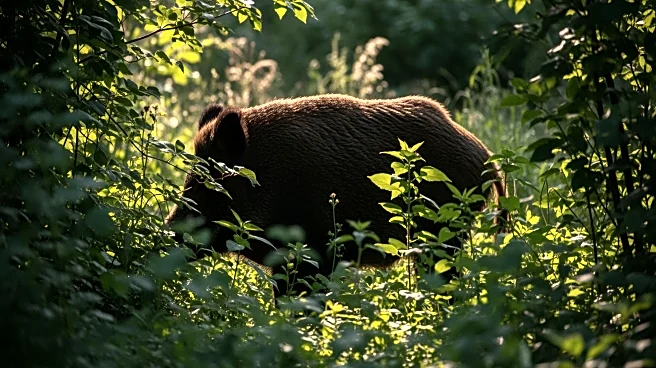
In Yavne, a wild boar was discovered in the garden of the Pais Hall for Music and Dance, causing alarm among local residents. The animal, which had ventured into the urban area, was eventually subdued by authorities after a prolonged effort. It was found
injured and was tranquilized with a dart. Unfortunately, the boar was pronounced dead shortly after being captured. This incident highlights the increasing presence of wild animals in urban environments, as they become more accustomed to human-populated areas. Authorities have advised the public to maintain a safe distance from wild animals and to avoid leaving food or garbage in open areas, which can attract such wildlife.
Why It's Important?
The incident underscores a growing concern about wildlife encroaching into urban areas, which poses potential risks to public safety and raises questions about human-wildlife coexistence. As wild animals like boars become more frequent visitors to cities, there is an increased need for public awareness and effective management strategies to prevent potential dangers. This situation also highlights the broader environmental issues related to habitat loss and urban expansion, which force wildlife to seek resources in human-dominated landscapes. The event serves as a reminder of the delicate balance between urban development and wildlife conservation.
What's Next?
Local authorities may need to implement more robust measures to manage wildlife incursions into urban areas. This could involve increased monitoring of wildlife movements, public education campaigns on how to safely coexist with wild animals, and possibly the development of policies to mitigate the impact of urban expansion on natural habitats. Additionally, there may be discussions on improving waste management practices to reduce attractants for wildlife in cities. Stakeholders, including environmental groups and city planners, might collaborate to find sustainable solutions that protect both human communities and wildlife.