




What's Happening?
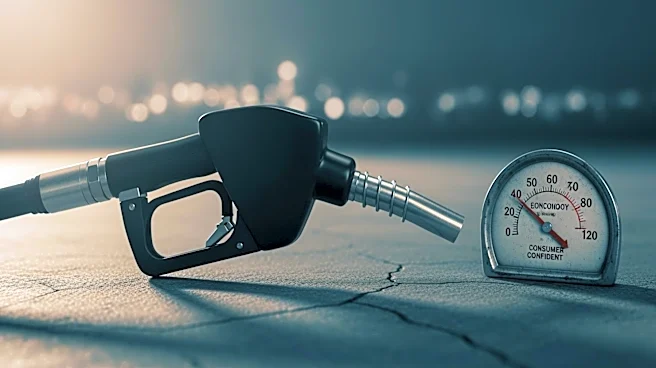
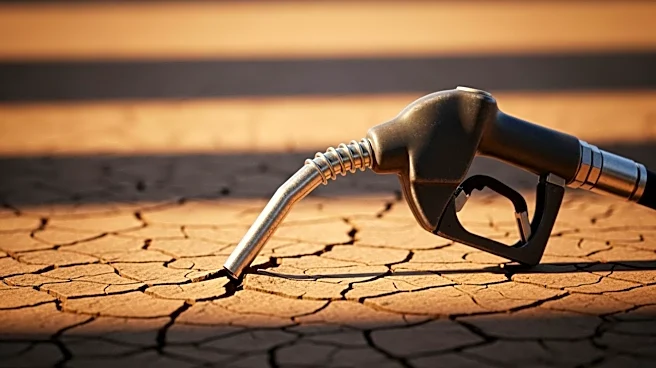
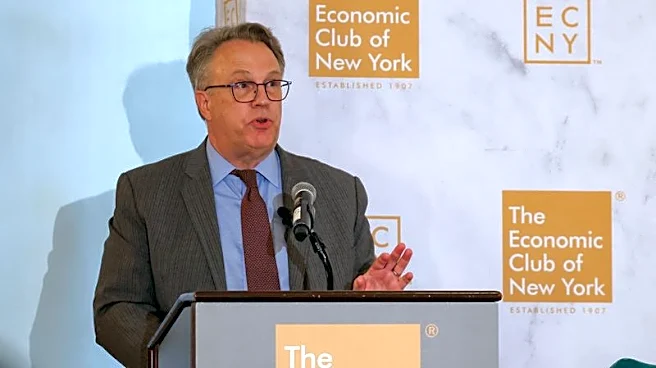
A recent report from the Federal Reserve Bank of New York has highlighted the exacerbating effect of rising gas prices on economic inequality in the United States. The report indicates that while all income groups have experienced increased gas spending,
lower-income households are disproportionately affected. These households are reducing their real consumption more significantly than higher earners, who are better able to absorb the price hikes. The report suggests that lower-income individuals are likely resorting to measures such as carpooling or using public transportation to manage costs. The national average for regular unleaded gas has risen to $4.54, up from $4.12 a month ago, further straining household budgets.
Why It's Important?
The findings underscore the ongoing challenges of the K-shaped economic recovery, where higher earners continue to stabilize or improve their financial standing, while lower earners face increasing financial pressure. This disparity is particularly evident in essential spending categories like fuel, which can significantly impact daily life and economic mobility. The report's insights are crucial for policymakers and economic stakeholders as they consider measures to address inflation and support vulnerable populations. The widening gap in economic fortunes could lead to broader societal implications, including increased demand for public assistance and shifts in consumer behavior.
What's Next?
As gas prices remain high, consumers and policymakers alike will need to explore strategies to mitigate the impact on lower-income households. This could involve enhancing public transportation options, offering targeted subsidies, or implementing policies to stabilize fuel prices. Additionally, the report may prompt further analysis and discussion on the broader implications of inflation and economic inequality, potentially influencing future economic policy decisions.