







What's Happening?
Dr. Nicola “Nicky” Fox, Associate Administrator for NASA’s Science Mission Directorate (SMD), announced an accelerated approach to space science at the American Astronautical Society’s 26th annual von Braun Space Exploration Symposium. Fox emphasized
the need to achieve 'more science to space quicker' and with greater efficiency. SMD oversees approximately 150 missions, ranging from CubeSats to the James Webb Space Telescope. The directorate is re-evaluating its operational strategies to maximize scientific output while optimizing resource allocation. This includes initiatives like shared launches, rapid response to celestial events, and new procurement methods. For instance, the Nancy Grace Roman Space Telescope launched 10 months ahead of schedule and under budget, serving as a model for future missions. SMD is also exploring commercial partnerships for data and spacecraft, aiming to transition from single-purpose government satellites to more competitive commercial acquisitions. The goal is to streamline processes, reduce bureaucratic hurdles, and ensure greater value for taxpayer money in space exploration.
Why It's Important?
This strategic shift by NASA's Science Mission Directorate holds significant implications for the U.S. space industry and scientific community. By prioritizing efficiency and faster deployment, NASA aims to accelerate scientific discovery, potentially leading to quicker advancements in understanding the universe, Earth, and the search for extraterrestrial life. The emphasis on commercial partnerships could foster a more robust private space sector, creating new opportunities for American companies in spacecraft development, data provision, and mission support. This approach also seeks to optimize taxpayer dollars, ensuring that resources are allocated effectively to yield maximum scientific return. Furthermore, by making science results more accessible and useful, NASA can enhance public engagement and inspire future generations in STEM fields. The focus on cost-effective missions and shared launches could also free up resources for more ambitious projects, such as the Habitable Worlds Observatory and future interstellar probes, pushing the boundaries of human knowledge.
What's Next?
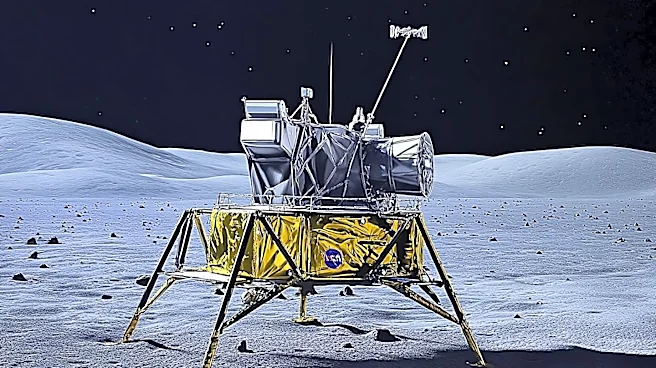
NASA's Science Mission Directorate plans to continue implementing its 'Faster to Science' competition model, which aims to simplify the proposal process and encourage broader participation from principal investigators. This model is designed to reduce the initial workload for proposals by approximately 45%, allowing for a greater focus on scientific merit rather than extensive preliminary details. NASA will also facilitate connections between proposers and established centers or contractors. The agency is actively seeking input from industry partners, as evidenced by over 900 responses to recent Requests for Information (RFIs) regarding commercial data and lunar payload services. With a target of 10 Commercial Lunar Payload Services (CLPS) landings per year starting in 2028, the volume of scientific payloads sent to the Moon is expected to increase dramatically. Additionally, SMD will continue to explore opportunities for shared launches and rapid response missions, aiming to maximize the scientific return from every space endeavor.
Beyond the Headlines
The shift towards 'more science to space quicker' by NASA's Science Mission Directorate represents a broader cultural and operational evolution within the agency. This approach challenges traditional, often lengthy, mission development cycles, pushing for agility and innovation. The emphasis on commercial partnerships not only leverages private sector capabilities but also signifies a growing interdependence between government and industry in space exploration, potentially leading to new economic models and technological breakthroughs. Ethically, this acceleration raises questions about balancing speed with thoroughness and risk assessment, especially in complex missions. The drive to make science more accessible and useful also underscores a commitment to public engagement and the democratization of scientific knowledge. Long-term, this strategy could redefine the landscape of space science, fostering a more dynamic and responsive ecosystem that can adapt quickly to new discoveries and technological advancements, ultimately shaping humanity's understanding of its place in the cosmos.