


What's Happening?
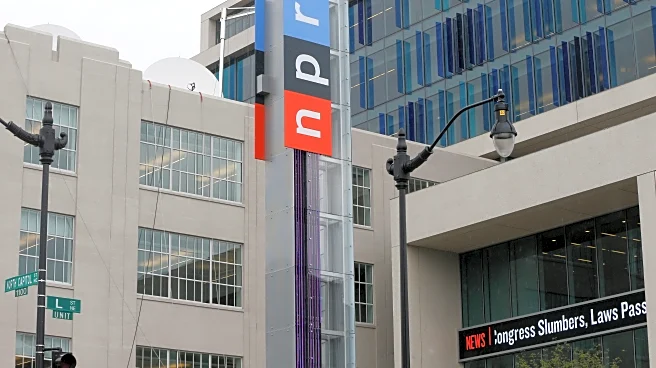
U.S. District Judge Randolph Moss has ruled against President Trump's executive order that aimed to defund NPR and PBS, citing a violation of the First Amendment. The order, issued on May 1, 2025, sought to withhold federal funds from NPR due to alleged
biased reporting. This decision came after a lawsuit filed by Colorado Public Radio, Aspen Public Radio, and other stations. The ruling prevents the executive order from restricting federal funds to NPR and PBS, although it does not restore previously rescinded funding. The lawsuit argued that the executive order was an attempt to control speech and punish protected speech, which the court agreed with, emphasizing the importance of a free press.
Why It's Important?
This ruling is significant as it reinforces the protection of free press under the First Amendment, preventing government interference in media operations. The decision is a victory for public radio stations and independent media, ensuring they can continue to receive federal support without fear of retaliation for their reporting. It highlights the ongoing tension between government actions and media freedom, with potential implications for how future administrations might interact with the press. The ruling also underscores the role of the judiciary in upholding constitutional rights against executive overreach.
What's Next?
While the ruling blocks the executive order, it does not restore previously rescinded funds, meaning public radio stations will continue to rely heavily on community support. The administration may choose to appeal the decision, which could lead to further legal battles. Public radio stations, alongside their legal teams, are prepared to defend the ruling at every stage. This case may set a precedent for future legal challenges involving government attempts to influence or control media content.