







What's Happening?
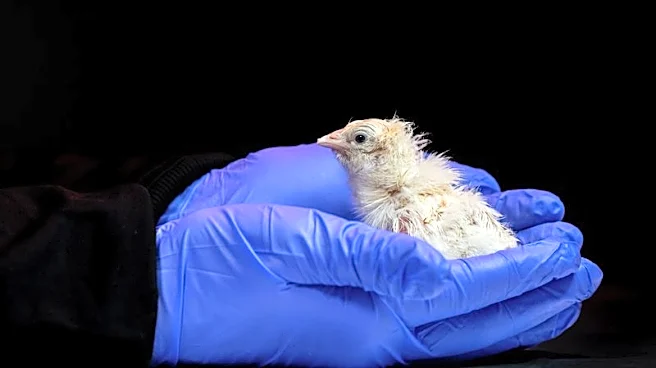
Colossal Biosciences, a biotech company focused on de-extinction, has successfully hatched 26 baby chickens using a 3D printed lattice structure that mimics an eggshell. This development is part of the company's broader mission to resurrect extinct species.
The artificial eggshell technology allows for the incubation of fertilized eggs, with added calcium to support embryo development. Colossal's CEO, Ben Lamm, suggests that this technology could eventually be used to genetically modify living birds to resemble extinct species, such as New Zealand's South Island giant moa. However, independent scientists have expressed skepticism, noting that while the technology is impressive, it lacks certain components necessary to be considered a true artificial egg. Critics also question the feasibility of reviving extinct species, emphasizing that the resulting creatures would be genetically modified birds rather than true replicas of extinct animals.
Why It's Important?
The development of artificial eggshell technology by Colossal Biosciences represents a significant advancement in genetic engineering and de-extinction efforts. If successful, this technology could pave the way for the revival of extinct species, potentially altering ecosystems and biodiversity. However, the ethical and ecological implications are substantial. Critics argue that resources might be better spent on conserving existing endangered species rather than attempting to bring back those that have already disappeared. The debate highlights the tension between scientific innovation and conservation priorities, raising questions about the responsibilities of scientists and the potential consequences of altering natural ecosystems.
What's Next?
Colossal Biosciences plans to continue refining its artificial eggshell technology, with the long-term goal of attempting to resurrect the moa. This will require further genetic research, including comparing ancient DNA from moa bones with genomes of living birds. The company also faces the challenge of creating a suitable environment for any resurrected species, as modern landscapes differ significantly from those in which extinct species once thrived. The scientific community and bioethicists will likely continue to scrutinize these efforts, debating the potential benefits and risks of de-extinction.
Beyond the Headlines
The pursuit of de-extinction raises profound ethical questions about humanity's role in shaping the natural world. While the technology could offer insights into evolutionary biology and genetics, it also poses risks of unintended ecological consequences. The introduction of genetically modified organisms into ecosystems could disrupt existing species and habitats. Additionally, the focus on de-extinction might divert attention and resources from pressing conservation efforts for endangered species. The broader societal implications of such technological advancements will require careful consideration and regulation.