




What's Happening?
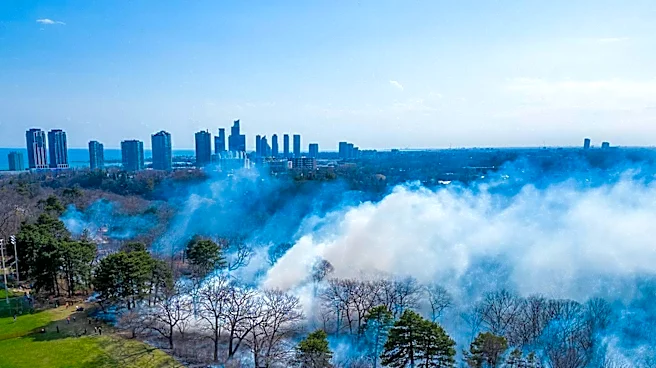
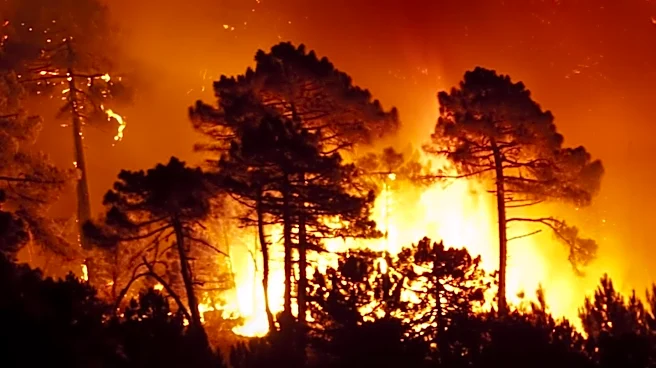
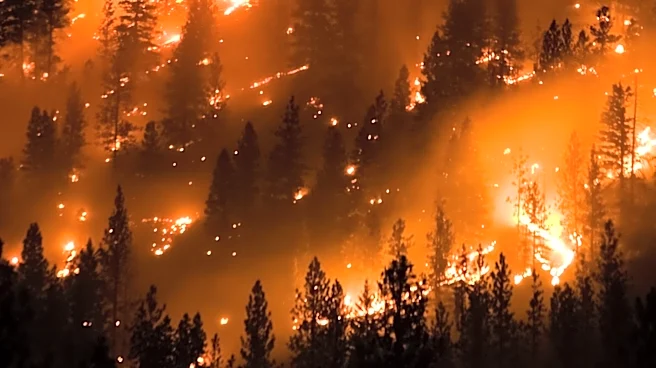
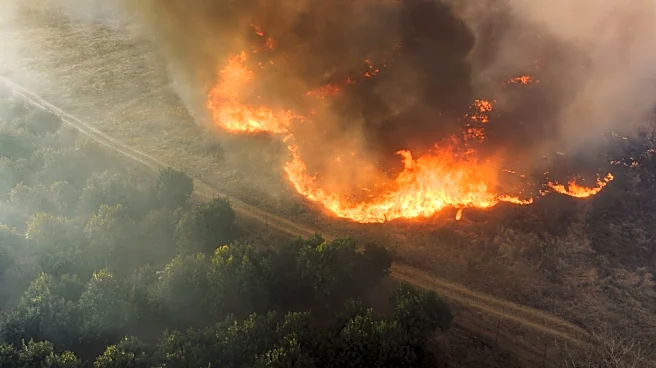
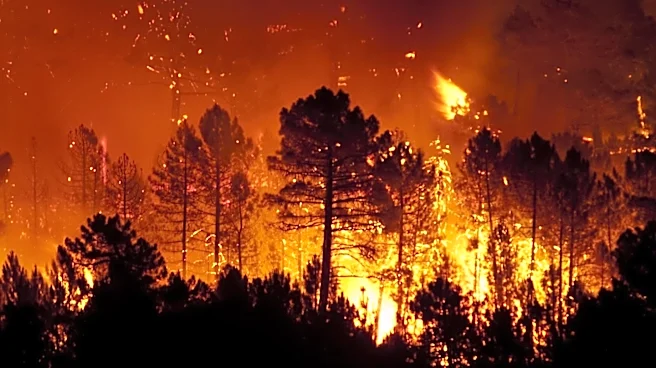
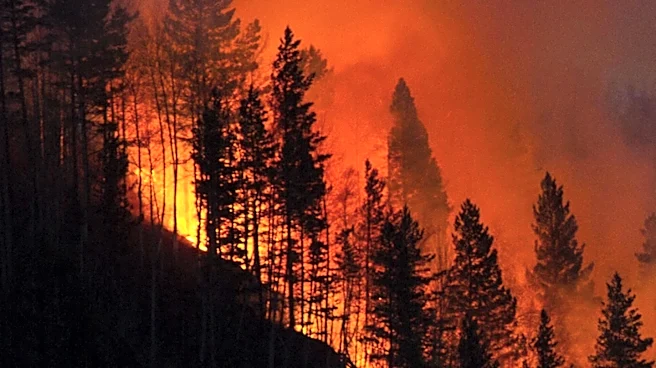
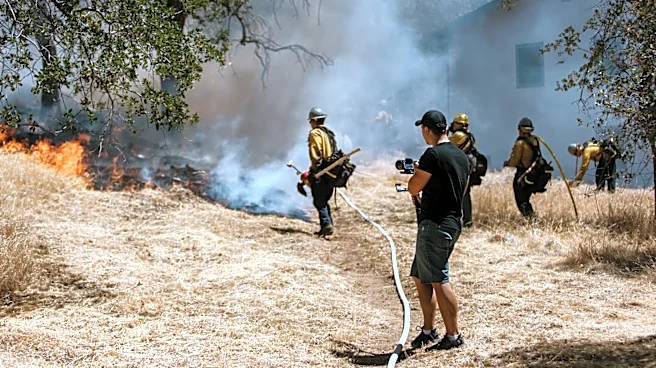
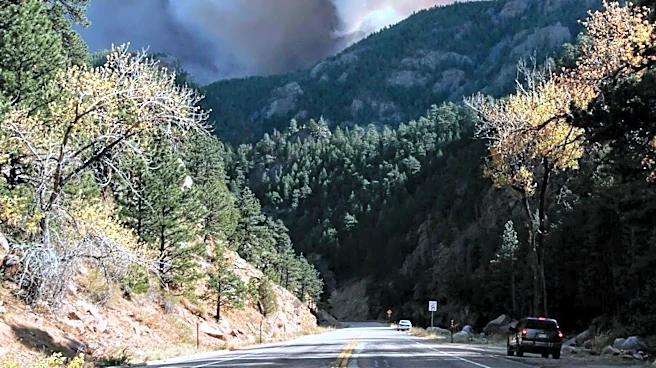
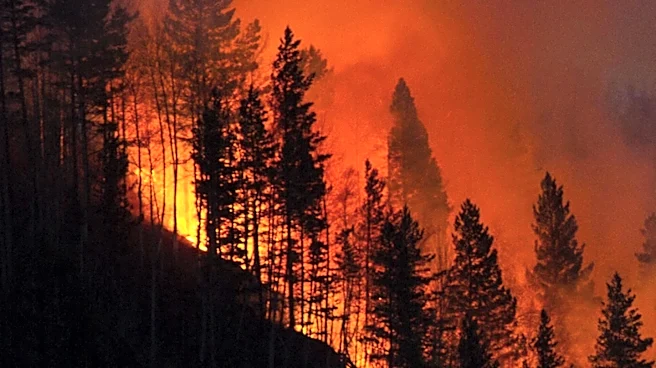
Smoke from wildfires in Canada and Minnesota is significantly affecting air quality in Michigan. The Michigan Department of Environment, Great Lakes and Energy has extended an Air Quality Alert across the state, initially issued for Wednesday, now possibly
continuing into Friday. The alert is due to the persistent and aggressive nature of the wildfires, which have led to elevated levels of fine particulate matter. CBS Detroit's chief meteorologist Ahmad Bajjey reported that smoke is expected to reach Southeast Michigan by Wednesday evening, continuing in hazardous bursts through Thursday night. The Mackinac Bridge Authority issued a travel alert, advising motorists to reduce speeds and use low-beam headlights due to the smoky haze. The air quality is expected to range from 'unhealthy for sensitive groups' in Southern Lower Michigan to 'unhealthy' in Northern Michigan, with potential spikes to 'very unhealthy' or 'hazardous' levels.
Why It's Important?
The deteriorating air quality poses significant health risks, particularly for sensitive groups such as children, older adults, and individuals with respiratory or heart conditions. The American Heart Association warns that exposure to wildfire smoke can increase the risk of heart disease. The situation underscores the broader environmental and public health challenges posed by wildfires, which are becoming more frequent and severe due to climate change. The widespread impact of the smoke highlights the interconnectedness of environmental issues across borders, as Canadian wildfires affect air quality in the U.S. This situation may prompt discussions on cross-border environmental policies and emergency response strategies.
What's Next?
As the air quality continues to worsen, residents are advised to limit outdoor activities, keep windows closed, and use air purifiers or air conditioning to reduce indoor smoke exposure. The Michigan Department of Environment, Great Lakes and Energy will continue to monitor air quality levels and update alerts as necessary. The situation may lead to increased public and governmental focus on addressing the root causes of wildfires and improving air quality management. Additionally, there may be calls for enhanced collaboration between the U.S. and Canada to address the transboundary nature of wildfire smoke and its impacts.