



What's Happening?
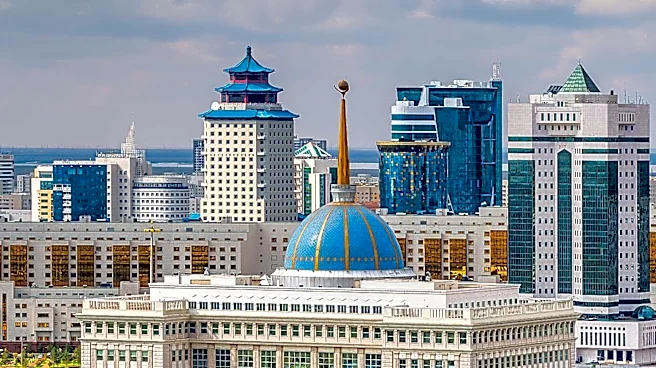
In Astana, Kazakhstan, eyewitnesses reported seeing suitcases filled with bundles of dollars being thrown from a window of the upscale Atlant-6 residential complex. A video circulating on social media showed cash scattered on the sidewalk, leading law
enforcement to cordon off the area. The incident occurred on Kunaev Street in the Esil district, with police reportedly receiving a call around 6:30 a.m. While initial reports mentioned approximately eight suitcases and bundles of $100 bills, the exact number, amount, and authenticity of the cash have not been officially confirmed. When journalists arrived, neither the money nor the police were present. This unusual event coincided with the detention of high-ranking officials in Kazakhstan: Nurlan Zhakupov, chairman of the board of the 'Samruk-Kazyna' National Welfare Fund, and Elzhas Otinshiev, head of 'Kazakhstan Temir Zholy,' were detained by the Anti-Corruption Service on November 11. Other individuals suspected of corruption were also detained. However, there is no official confirmation linking these detentions to the incident involving the suitcases of money.
Why It's Important?
The dramatic incident of money being thrown from a building, coupled with the simultaneous high-profile detentions of senior officials, creates a perception of significant corruption and illicit financial activity within Kazakhstan. While no direct link has been established, the timing suggests a potential connection to ongoing anti-corruption efforts or attempts to dispose of ill-gotten gains. Such events can erode public trust in government institutions and financial systems, both domestically and internationally. For U.S. and international businesses operating in or considering investment in Kazakhstan, this could raise concerns about governance, transparency, and the rule of law. The detentions of leaders from key state-owned entities like the 'Samruk-Kazyna' National Welfare Fund and 'Kazakhstan Temir Zholy' indicate a serious crackdown on corruption, which, if sustained, could lead to greater stability and a more predictable business environment in the long term, but also short-term uncertainty.
What's Next?
Kazakhstani authorities are expected to continue their investigations into both the incident of the discarded money and the corruption allegations against the detained officials. The National Security Committee and the Anti-Corruption Service will likely provide further details as their inquiries progress. The public will be watching for official statements that clarify any potential links between these events. Depending on the findings, there could be further arrests, asset seizures, and legal proceedings. The government may also implement new measures to enhance transparency and combat corruption within state-owned enterprises. For international observers and investors, the outcome of these investigations will be crucial in assessing Kazakhstan's commitment to good governance and its attractiveness as a business destination. The incident could also spark broader public discourse within Kazakhstan about wealth disparity and accountability among the elite.
Beyond the Headlines
The spectacle of money being thrown from a building, whether connected to the detentions or not, serves as a powerful symbol of illicit wealth and the desperate measures individuals might take to conceal or dispose of it. This event taps into a global narrative of corruption and the challenges faced by nations in combating financial crime. The lack of immediate official confirmation regarding the money's authenticity or its connection to the detentions leaves room for speculation and could fuel public distrust. Beyond the immediate legal ramifications, such incidents can have profound societal impacts, reinforcing perceptions of systemic corruption and potentially leading to calls for more radical reforms. The broader context of anti-corruption drives in post-Soviet states often involves complex power dynamics and can be influenced by political maneuvering. The long-term success of Kazakhstan's anti-corruption efforts will depend not only on prosecuting individuals but also on implementing fundamental structural changes to prevent future abuses.