






What's Happening?
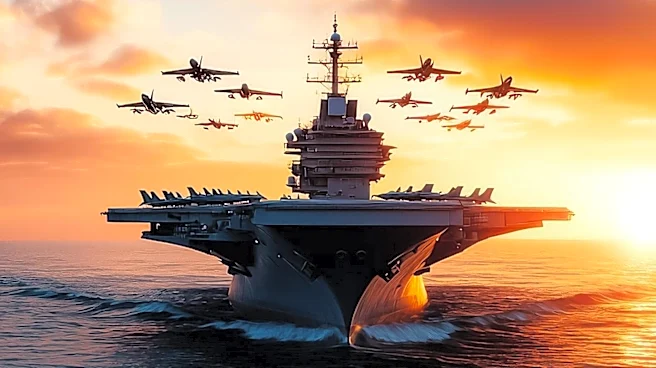
A comparison between the U.S. Nimitz-class aircraft carrier and China's Liaoning reveals significant differences in capability, with the Nimitz holding a substantial advantage. The USS Nimitz, commissioned in 1975, is nearly twice the size of the Liaoning,
displacing 112,020 short tons compared to the Liaoning's 60,900 short tons. This size difference translates to a larger crew capacity (approximately 6,000 for Nimitz versus 2,600 for Liaoning) and a significantly larger air wing, with the Nimitz carrying over 90 aircraft compared to the Liaoning's 40. Key operational distinctions include the Nimitz's CATOBAR (Catapult Assisted Take-Off But Arrested Recovery) system, which allows for heavier aircraft launches, and its nuclear propulsion, providing unlimited range. In contrast, the Liaoning uses a STOBAR (Short Take-Off But Arrested Recovery) system with a ski jump, limiting aircraft weight and thus their fuel and weapons loadout, and relies on conventional steam propulsion with a limited range of approximately 3,850 nautical miles.
Why It's Important?
The disparity in aircraft carrier capabilities between the U.S. Nimitz-class and China's Liaoning is critical for global power projection and naval strategy. The Nimitz's superior size, advanced launch systems, and nuclear propulsion grant the U.S. Navy unparalleled operational flexibility and endurance. This allows American carrier strike groups to deploy a diverse and heavily armed air wing, including advanced fighter jets like the F/A-18 Super Hornet and F-35C Lightning II, as well as crucial enabler aircraft like the E-2 Hawkeye for airborne early warning and command and control. These capabilities provide a significant advantage in detecting, organizing, and managing air battles over vast distances. China's Liaoning, while a step in its carrier aviation development, faces limitations in aircraft performance and logistical demands due to its design. This gap highlights the U.S.'s continued dominance in naval aviation, impacting strategic balances in regions like the Indo-Pacific and influencing international security dynamics.
What's Next?
While the U.S. currently maintains a significant lead in aircraft carrier technology and operational experience, China is actively working to close this gap. The Liaoning, initially an experimental platform, has paved the way for more advanced Chinese carriers like the Fujian and the upcoming Type 004. These newer Chinese carriers are expected to incorporate more sophisticated technologies and designs, potentially including CATOBAR systems, to enhance their capabilities. The ongoing development of China's carrier fleet suggests a long-term strategic goal to project power further and challenge existing naval hegemonies. This will likely lead to continued investment in naval research and development by both nations, potentially escalating a naval arms race. Future comparisons will focus on how quickly China can integrate advanced features and operational experience to match the U.S.'s decades of supercarrier expertise, influencing future geopolitical stability and military postures.
Beyond the Headlines
The technological and operational differences between the Nimitz and Liaoning carriers reflect deeper strategic philosophies and national priorities. The U.S.'s nuclear-powered supercarriers embody a strategy of global reach and sustained presence, enabling rapid response and power projection across any ocean. This capability is a cornerstone of American foreign policy and its network of alliances. Conversely, China's development of aircraft carriers, starting with the Liaoning, signifies its ambition to expand its maritime influence beyond its immediate coastal waters and protect its growing global interests. This pursuit of carrier technology is not merely about military hardware but also about national prestige and the assertion of a rising global power. The evolution of these naval forces will have profound implications for international law, freedom of navigation, and the balance of power in critical maritime chokepoints, shaping the geopolitical landscape for decades to come.