








What's Happening?
The European Union (EU) is enhancing its economic partnership with Kazakhstan through significant infrastructure investments. The European Bank for Reconstruction and Development and the European Investment Bank have announced funding to modernize Kazakhstan's
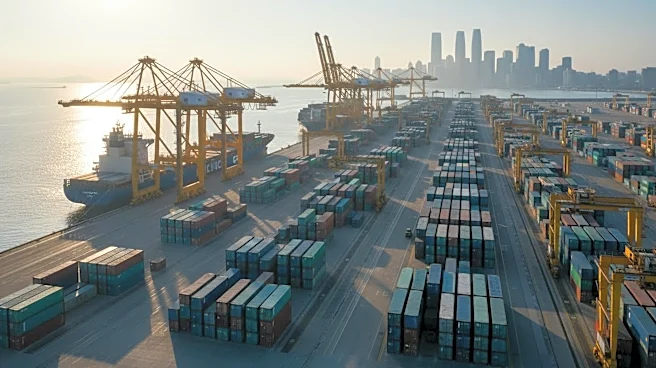
road infrastructure, including a EUR 230 million investment to upgrade 234 km of road between Aktobe and Ulgaysyn, and EUR 150 million for the rehabilitation of 1,370 km of roads along the Trans-Caspian Transport Corridor. These projects aim to improve the movement of goods and people between Central Asia and Europe. The partnership is part of a broader strategy to diversify Europe's supply chains and strengthen its economic ties with Central Asia.
Why It's Important?
This development is crucial as it represents a strategic shift in the EU's approach to Central Asia, moving from a focus on transit to a comprehensive economic partnership. By investing in Kazakhstan's infrastructure, the EU is not only enhancing trade routes but also securing access to critical raw materials and alternative supply chains. This partnership could reduce Europe's dependence on traditional routes through Russia and China, offering more resilience in its supply chains. For Kazakhstan, this collaboration provides an opportunity to position itself as a key economic hub, attracting more investments and diversifying its economy.
What's Next?
The ongoing development of the Trans-Caspian Transport Corridor and other infrastructure projects will likely continue to strengthen the economic ties between the EU and Kazakhstan. As these projects progress, they may attract further investments and partnerships, enhancing Kazakhstan's role as a strategic partner for Europe. Additionally, the focus on infrastructure development could lead to improvements in Kazakhstan's logistics and transportation sectors, further integrating the country into the global economy.
Beyond the Headlines
The partnership between the EU and Kazakhstan also highlights the geopolitical dynamics in the region. As Kazakhstan strengthens its ties with Europe, it must balance its relationships with neighboring powers like Russia and China. The development of alternative routes and partnerships could provide Kazakhstan with greater economic leverage and independence, allowing it to navigate its foreign policy more effectively.