


What's Happening?
The Pakistan Kisan Ittehad (PKI), led by President Khalid Mahmood Khokhar, has raised alarms over the declining state of the country's agriculture sector, urging the government to declare an agriculture emergency. During a press conference in Multan,
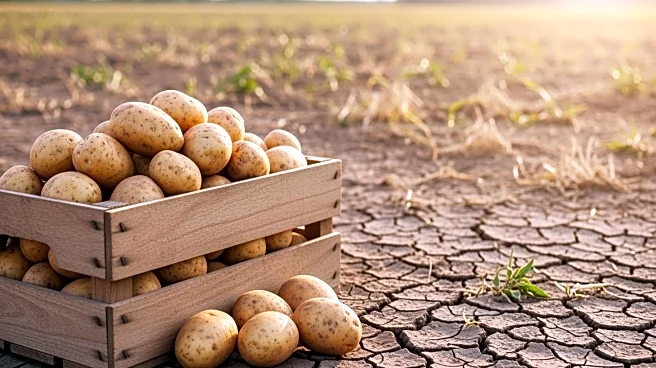
Khokhar highlighted the severe financial losses faced by farmers, particularly in the potato market, where prices have plummeted from Rs 8,000 to Rs 1,800 for a 120-kg bag. He called for immediate government intervention to purchase and export potatoes at official levels. Khokhar criticized the price control authorities for failing to protect farmers' interests and demanded the removal of officials lacking agricultural expertise. Additionally, he addressed issues such as the illegal suspension of solar net metering, high electricity rates for agricultural tubewells, and the need for advance announcement of support prices for major crops.
Why It's Important?
The call for an agriculture emergency by the PKI underscores the critical challenges facing Pakistan's agricultural sector, which is vital for the country's economy and food security. The drastic drop in potato prices reflects broader market instability that could lead to significant financial distress for farmers, potentially affecting food supply chains and consumer prices. The PKI's demands for policy changes, such as fixing electricity rates and introducing crop insurance, aim to stabilize the sector and protect farmers' livelihoods. The situation highlights the need for government action to address systemic issues in agriculture, which could have far-reaching implications for economic stability and rural development.
What's Next?
The PKI has announced plans to present a charter of demands to the government, seeking comprehensive reforms to revive the agriculture sector. If these demands are not met, the PKI has warned of a protest outside the Punjab Assembly on January 26. This potential protest could draw significant attention to the plight of farmers and pressure the government to take swift action. The outcome of these negotiations and any subsequent government response will be crucial in determining the future trajectory of Pakistan's agricultural policies and the well-being of its farming communities.
Beyond the Headlines
The PKI's call for an agriculture emergency also raises questions about the broader socio-economic dynamics in Pakistan. The neglect of farmers' needs and the failure to implement effective price controls reflect deeper governance challenges. Addressing these issues requires not only immediate policy interventions but also long-term strategic planning to enhance agricultural productivity and sustainability. The situation also highlights the importance of investing in agricultural research and infrastructure to support farmers and ensure food security in the face of climate change and other global challenges.