






What's Happening?
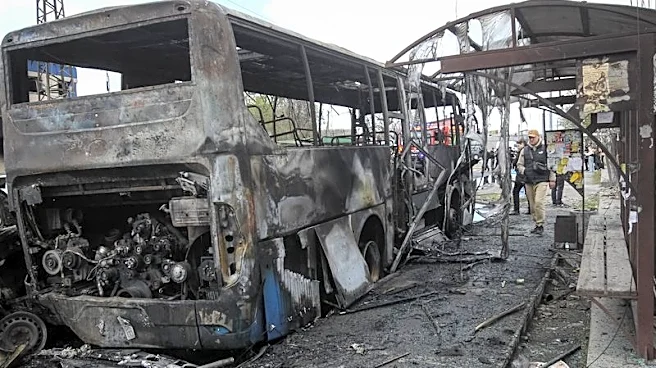
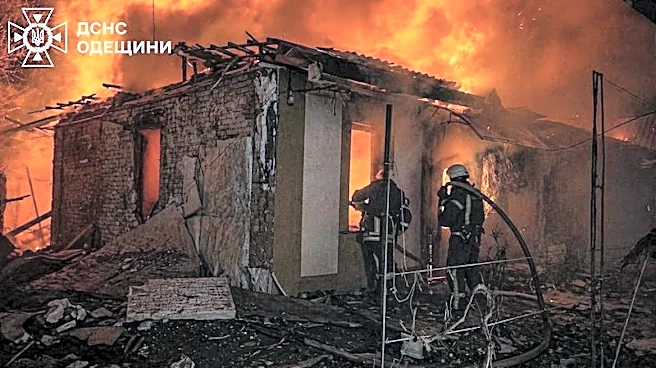
A Russian drone strike on a minibus in Kherson, Ukraine, resulted in the deaths of two civilians and injuries to seven others. This attack is part of a broader pattern of Russian assaults on civilian areas since the full-scale invasion began. Concurrently,
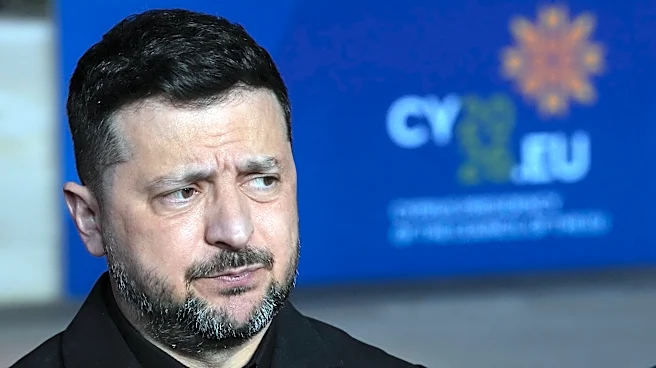
Ukrainian President Volodymyr Zelensky reported 'unusual activity' on the Belarusian border, suggesting potential escalation. Belarus, a Kremlin ally, has been a strategic location for Russian military operations. Additionally, Russia claims to have made progress on the front lines, capturing a village in Ukraine's Sumy region, though these claims remain unverified.
Why It's Important?
The drone strike in Kherson underscores the ongoing humanitarian crisis and the targeting of civilian areas in the conflict. The situation on the Belarusian border adds a layer of complexity, potentially expanding the conflict's scope. For Ukraine, these developments necessitate a multifaceted defense strategy, balancing immediate military responses with long-term diplomatic efforts. The international community faces challenges in addressing these escalations, with potential implications for global security and economic stability. The conflict's persistence continues to strain resources and test international alliances.
What's Next?
Ukraine is expected to bolster its defenses along the Belarusian border while continuing to address the humanitarian needs arising from ongoing attacks. International diplomatic efforts may intensify to prevent further escalation, with potential discussions on sanctions or military aid. The situation requires close monitoring, as any miscalculation could lead to broader regional conflict. The international community will likely continue to support Ukraine through diplomatic channels and humanitarian aid, while assessing the impact of the conflict on global economic and security frameworks.