





What's Happening?
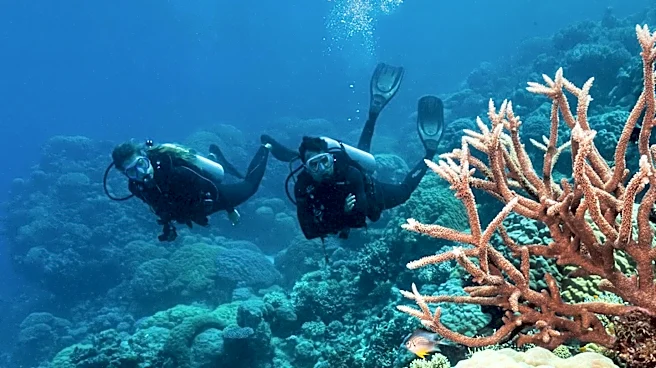
Scientists in the Florida Keys successfully collected tens of thousands of elkhorn and staghorn coral larvae during a rare annual spawning event. This collaborative project, involving twelve environmental organizations including the University of Miami
Rosenstiel School, Reef Renewal USA, and Mote Marine Laboratory, aims to rebuild the region's dying reef populations. The critical event occurred just after 10 p.m. when elkhorn and staghorn corals released millions of egg and sperm bundles. Research teams intervened to collect this genetic material, with the goal of creating a resilient new generation of coral. The collected larvae will be nurtured in specialized nurseries for two years before being permanently planted back onto Florida reefs. This effort is a direct response to the severe decline of Florida's coral reefs due to years of coral bleaching, which has made natural reproduction nearly impossible for the remaining, widely dispersed coral colonies.
Why It's Important?
The decline of Florida's coral reefs poses a significant threat to the state's marine ecosystem and economy. Coral reefs are vital habitats for numerous marine species, protect coastlines from erosion and storm surges, and support a substantial tourism industry through activities like snorkeling and diving. The current project is crucial because wild coral populations, particularly staghorn and elkhorn corals, have plummeted to dangerously low numbers, with only 300 staghorn and fewer than 150 elkhorn corals remaining. By collecting and nurturing larvae, scientists are actively intervening to prevent the complete collapse of these critical ecosystems. The collaborative approach, pooling resources and expertise from multiple institutions, is designed to create stronger, more resilient coral strains capable of withstanding rising ocean temperatures and increased acidity, which are major factors in coral bleaching. This initiative is essential for preserving biodiversity, maintaining coastal protection, and sustaining the economic benefits derived from healthy coral reefs in Florida.
What's Next?
The newly created coral larvae have been distributed among the participating partner organizations, including Reef Renewal USA, The Florida Aquarium, and the Smithsonian. These research teams will now focus on nurturing and growing the young corals within controlled environments. The immediate next step involves monitoring their development and ensuring their health and growth in these specialized nurseries. The ultimate goal of this multi-year project is to return these grown corals to nursery sites within two years, where they will be established as permanent residents on Florida's natural reefs. This reintroduction aims to bolster the existing, struggling coral populations and re-establish a self-sustaining ecosystem. Continued monitoring of the planted corals will be essential to assess the long-term success of this restoration effort and to adapt strategies as needed to combat ongoing environmental challenges.
Beyond the Headlines
This coral restoration project highlights the broader implications of climate change and ocean acidification on marine ecosystems and the proactive measures being taken to mitigate these impacts. The emphasis on cross-breeding resilient corals capable of surviving warmer and more acidic ocean conditions underscores a shift towards adaptive conservation strategies. This approach acknowledges that simply restoring coral populations may not be enough without also enhancing their genetic fitness against environmental stressors. The collaboration among numerous scientific and environmental organizations also sets a precedent for large-scale, coordinated efforts in addressing complex ecological crises. Furthermore, the project brings to light the ethical considerations of human intervention in natural processes, balancing the need to preserve biodiversity with the potential long-term effects of introducing genetically selected strains. The success of this initiative could serve as a model for similar conservation efforts globally, demonstrating the potential for scientific innovation to combat environmental degradation.