

What's Happening?
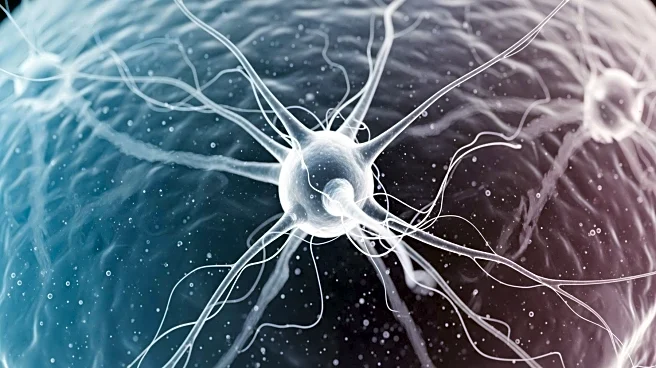
Researchers at Washington University School of Medicine in St. Louis have developed a new cellular immunotherapy aimed at reducing amyloid plaques in the brain, a hallmark of Alzheimer's disease. This innovative approach involves engineering astrocytes,
the most abundant brain cell type, to become amyloid-cleaning machines. The therapy uses a chimeric antigen receptor (CAR) to enable astrocytes to target and remove amyloid beta proteins. In experiments with mice, a single injection of this therapy prevented plaque development in young mice and reduced existing plaques by 50% in older mice. This method, published in the journal Science, represents a significant advancement over current treatments, which typically require frequent infusions.
Why It's Important?
This development is significant as it offers a potential new treatment for Alzheimer's disease, which affects millions of people worldwide. Current treatments, such as monoclonal antibodies, require regular infusions and only extend independent living by about 10 months. The new CAR-astrocyte therapy could simplify treatment by reducing the frequency of interventions and potentially improving outcomes. If successful in humans, this approach could transform the management of Alzheimer's, offering a more efficient and less invasive option for patients. The research also opens avenues for treating other neurodegenerative diseases and brain tumors by adapting the CAR technology.
What's Next?
The researchers plan to refine the CAR-astrocyte therapy to enhance its effectiveness and ensure it does not adversely affect normal brain functions. Future studies will focus on optimizing the design to better target harmful proteins and exploring the potential of using this technology to treat brain tumors. The team has filed a patent for their approach, indicating a move towards clinical trials and potential commercialization. If successful, this therapy could become a pivotal tool in the fight against Alzheimer's and other central nervous system diseases.