


What's Happening?
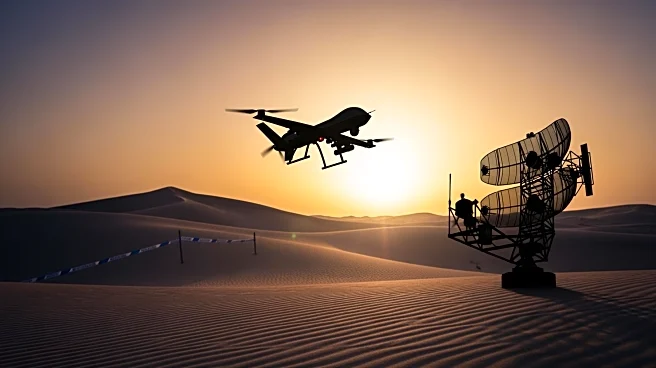
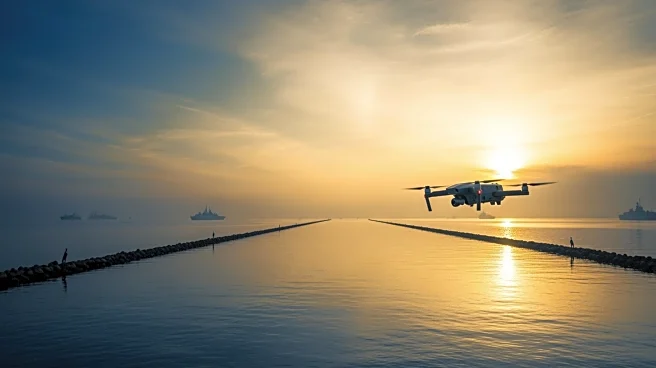
Iran has repositioned its strike drones and other military assets under the cover of joint military exercises with Russia in the Strait of Hormuz. This move, described as a 'calculated escalation' by defense expert Cameron Chell, comes amid rising tensions
with the United States. The repositioning follows sightings of U.S. MQ-9 Reaper drones, which have precision strike capabilities, in the region. The joint exercises with Russia provide a strategic cover for Iran to move its drones into potential strike positions. The U.S. has also been active in the region, with the USS Gerald R. Ford aircraft carrier and its accompanying ships heading towards the Mediterranean Sea. This development is part of a broader geopolitical tension involving U.S. and Iranian military posturing.
Why It's Important?
The repositioning of Iranian drones in the Strait of Hormuz is significant due to the strategic importance of the region, which is a critical chokepoint for global oil shipments. The move could escalate tensions between Iran and the U.S., potentially impacting global oil markets and regional stability. The presence of U.S. military assets, including surveillance drones and aircraft carriers, indicates a heightened state of readiness and deterrence. This situation underscores the ongoing geopolitical struggle in the Middle East, with potential implications for international diplomacy and security. The involvement of Russia in joint exercises with Iran adds another layer of complexity, potentially affecting U.S.-Russia relations.
What's Next?
The international community will likely monitor the situation closely, with potential diplomatic efforts to de-escalate tensions. The U.S. may continue to bolster its military presence in the region as a deterrent, while Iran might seek to leverage its strategic positioning in negotiations. The outcome of these developments could influence future U.S. foreign policy decisions in the Middle East. Additionally, any further military actions or provocations could lead to increased calls for diplomatic intervention from global powers.