










What's Happening?
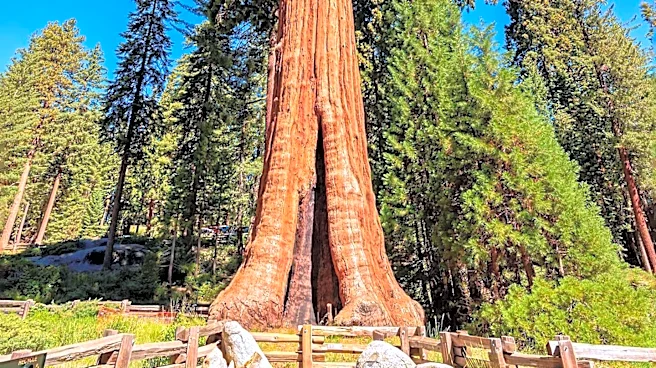
A NASA-funded study has revealed that controlled burns significantly enhance the survival rates of giant sequoias during wildfires. The research, published in Nature Communications, analyzed data from 26,403 giant sequoias across 19 groves in Sequoia
and Kings Canyon National Parks. The study found that sequoias in areas managed with prescribed burns were nearly four times more likely to survive extreme wildfires. This method reduces tree mortality by thinning underbrush and dead wood, which are primary fuels for high-intensity fires. The study comes in the wake of the 2020 and 2021 fire seasons, which saw a record 6.8 million acres burned across California, resulting in the destruction of 19% of the mature giant sequoia population.
Why It's Important?
The findings underscore the critical role of forest management practices in preserving giant sequoias, which are keystone species in their ecosystem. These trees serve as carbon sinks, water filters, and habitats for various wildlife. The study provides empirical evidence supporting the use of prescribed burns, a practice that has been largely anecdotal until now. This research could influence forest management policies and conservation strategies, potentially leading to broader adoption of controlled burns to protect old-growth forests worldwide. The survival of these iconic trees is vital not only for biodiversity but also for their ecological functions and cultural significance.
What's Next?
The study's results may prompt policymakers and conservationists to advocate for increased use of prescribed burns in forest management. This could lead to changes in regulations and funding allocations to support such practices. Additionally, the research highlights the value of high-resolution remote sensing in conservation efforts, suggesting that similar techniques could be applied to other vulnerable ecosystems. As climate change continues to exacerbate wildfire risks, the adoption of effective management strategies like controlled burns will be crucial in mitigating damage and preserving biodiversity.