


What's Happening?
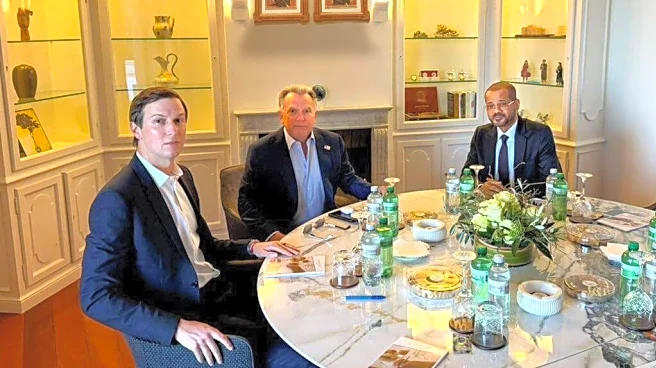
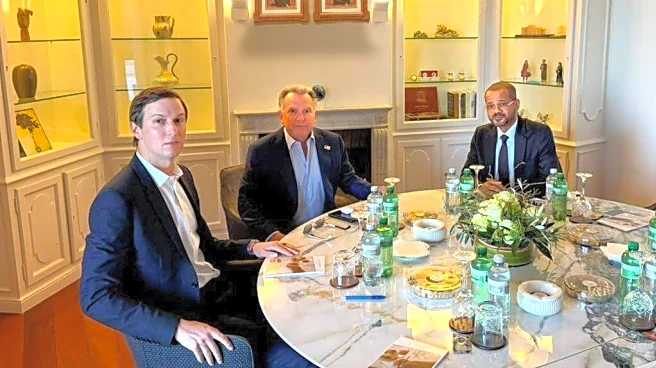
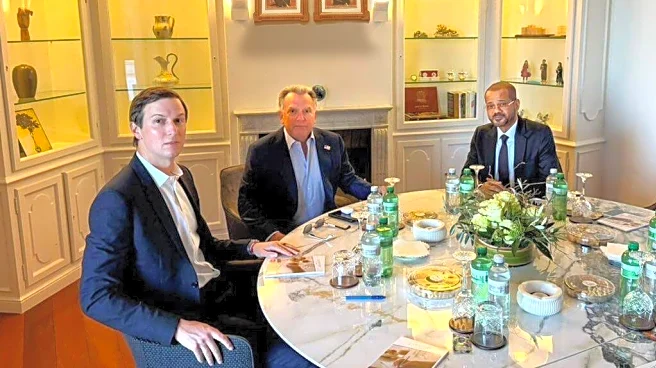
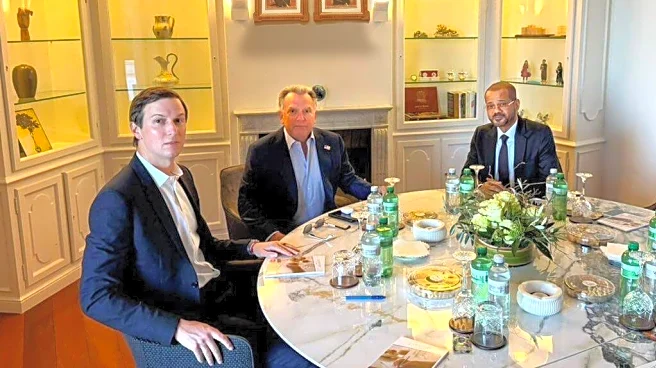
Admiral Brad Cooper, the chief of the United States Central Command (CENTCOM), has briefed President Trump on potential military options against Iran. This briefing occurred while the Trump administration's special envoy, Steve Witkoff, and Jared Kushner
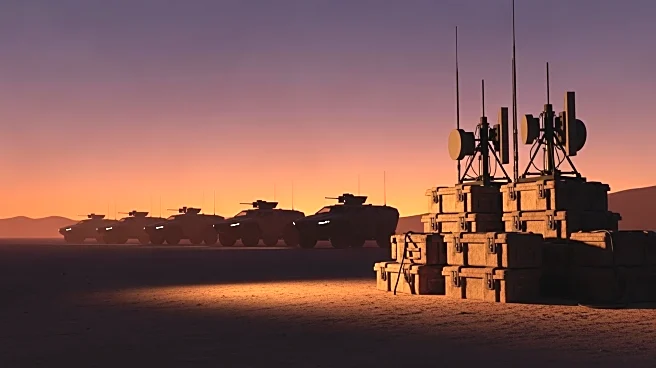
were engaged in nuclear talks with Iran in Geneva. The discussions are part of a broader strategy to prevent Iran from acquiring nuclear weapons. Vice President JD Vance has publicly stated that there is no chance of the U.S. being drawn into a prolonged Middle Eastern conflict as a result of these actions. Additionally, Oman's Foreign Minister Badr bin Hamad al-Busaidi is scheduled to meet with U.S. officials in Washington to discuss efforts to avoid war with Iran. The situation is further complicated by the presence of American military forces in the region, the largest buildup since 2003, aimed at pressuring Iran into a deal.
Why It's Important?
The potential for military action against Iran carries significant implications for U.S. foreign policy and regional stability in the Middle East. A military strike could escalate tensions and lead to broader conflict, affecting global oil markets and international relations. The Trump administration's approach, which includes both diplomatic talks and military preparedness, reflects a complex strategy to address nuclear proliferation concerns. The involvement of key figures like Jared Kushner and Steve Witkoff in negotiations highlights the administration's commitment to finding a diplomatic solution, while the military buildup underscores the seriousness of the threat perceived by the U.S. The outcome of these negotiations and potential military actions could have lasting impacts on U.S. alliances and its role in the Middle East.
What's Next?
Further discussions are planned in Vienna, following what has been described as significant progress in the Geneva talks. The U.S. is likely to continue its dual approach of diplomacy and military readiness. The meeting between Oman's Foreign Minister and U.S. officials could play a crucial role in de-escalating tensions. Additionally, the Trump administration may consider the optics of any military action, potentially preferring an initial strike by Israel to garner domestic and international support. The situation remains fluid, with the potential for rapid developments depending on the outcomes of ongoing diplomatic efforts and military preparations.
Beyond the Headlines
The strategic considerations behind a potential U.S. strike on Iran involve not only military and diplomatic factors but also political calculations. The administration's preference for Israel to initiate action suggests a desire to manage public perception and political fallout. This approach reflects broader geopolitical dynamics, where U.S. actions are influenced by alliances and the need to maintain regional stability. The presence of American forces in the Middle East serves as both a deterrent and a potential catalyst for conflict, highlighting the delicate balance of power in the region.