









What's Happening?
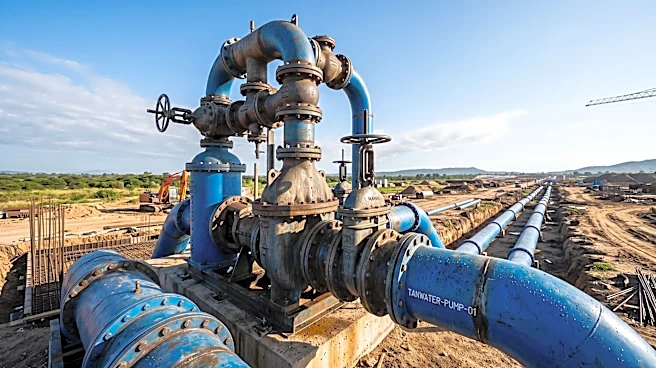
The Tanzanian government has launched a significant water project valued at 37.55 billion Tanzanian shillings in the Mwanza Region. This initiative aims to provide clean and safe piped water to over 85,468 residents across Ukiliguru, Kolomije, and Usagara,
connecting them to Sumve in Misungwi District. The project is currently 46% complete and is part of a broader government commitment to expand access to essential services. Mr. Paul Makonda, Minister for Information, Arts, Culture, and Sports, speaking on behalf of President Samia Suluhu Hassan, reiterated the government's dedication to implementing major water projects. He urged those responsible for the project's execution to ensure timely completion so that local communities can quickly benefit from the investment, particularly highlighting the positive impact on women and girls who often bear the burden of water collection.
Why It's Important?
This water project in Tanzania holds importance for U.S. interests, particularly in the context of development aid, public health, and regional stability. Improved access to clean water directly addresses critical public health challenges, reducing waterborne diseases and enhancing overall community well-being. This aligns with U.S. foreign policy goals of promoting global health and sustainable development. Furthermore, by alleviating the burden of water collection, especially for women and girls, the project can empower communities, improve educational opportunities, and foster economic productivity. For U.S. businesses, such infrastructure development projects can create opportunities for partnerships, technology transfer, and investment in related sectors like water treatment and distribution. The stability and prosperity that result from improved basic services can also contribute to a more secure and predictable environment for U.S. engagement in the region.
What's Next?
The immediate next steps involve the continued construction and implementation of the water project, with a strong emphasis on meeting the completion deadline. The Minister's call for timely execution indicates the government's desire to deliver tangible benefits to its citizens promptly. Following completion, the focus will shift to the operational aspects, including maintenance, water quality monitoring, and ensuring equitable distribution across the targeted areas. The success of this project could serve as a model for future water infrastructure initiatives in Tanzania and potentially attract further international funding and partnerships. The U.S. and other international development partners will likely monitor the project's impact and efficiency, which could influence future aid allocations and collaborative efforts in the water sector.
Beyond the Headlines
Beyond the immediate provision of clean water, this project has deeper societal and economic implications. Access to reliable water sources is a fundamental human right and a critical component of sustainable development. By investing in such infrastructure, the Tanzanian government is addressing a core need that can unlock broader socio-economic progress. The empowerment of women and girls, who are disproportionately affected by water scarcity, can lead to increased participation in education and economic activities, fostering greater gender equality. Moreover, the project can contribute to environmental sustainability by reducing reliance on unsafe water sources and promoting better sanitation practices. For the U.S., supporting such initiatives, directly or indirectly, reinforces its commitment to global development goals and can enhance its soft power and influence in the region by demonstrating a shared commitment to improving human welfare.