







What's Happening?
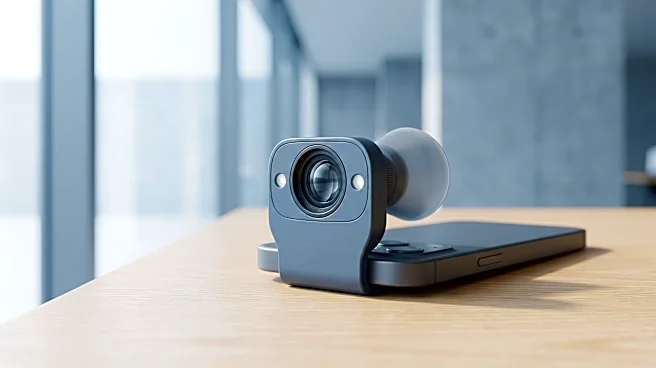
Scientists, in collaboration with researchers from Johns Hopkins University and Aravind Eye Hospital in India, have developed a low-cost smartphone attachment designed to screen for cataracts and other eye problems in rural communities. This device, which
costs less than £150 including the smartphone, clips onto a smartphone camera and includes a magnifying lens, two small white LEDs, and a silicone scope to ensure clear images. The system allows community health workers with minimal ophthalmic training to capture diagnostic-quality eye images in the field. These images can then be reviewed remotely by ophthalmologists, decoupling the need for a specialist to be physically present at every screening. A study involving 1,093 patients across 19 rural camps in South India demonstrated an 89% agreement between remote screening using the device and in-person examinations for identifying cataracts, rising to 96% for mature cataracts. The most clinically significant finding was a 96% agreement between remote and in-person ophthalmologists regarding the need for hospital referral.
Why It's Important?
This innovation holds significant importance for addressing healthcare disparities, particularly in underserved regions globally, including potentially in the U.S. where access to specialized medical care can be limited in rural areas. Cataracts remain a leading cause of blindness worldwide, disproportionately affecting populations with limited access to eye specialists. The traditional 'eye camp' model, while effective, is expensive, logistically complex, and dependent on specialist availability, reaching only a fraction of those in need. This smartphone-based screening tool offers a scalable and cost-effective alternative, enabling earlier detection and intervention for cataracts. By allowing community health workers to conduct initial screenings, it frees up ophthalmologists to focus on diagnosis and decision-making, maximizing their expertise. This approach could significantly improve public health outcomes by increasing access to timely cataract assessment and treatment, especially for vulnerable populations such as women, the elderly, and the poor.
What's Next?
Researchers plan to further improve the system by adding features such as slit-beam and blue-light imaging, and the capability to take images after pupil dilation, which are standard components of comprehensive eye examinations. These enhancements aim to make remote diagnosis even easier for ophthalmologists. The platform is designed to integrate with existing community health worker infrastructures and function effectively in low-bandwidth environments. Furthermore, it is compatible with future AI-based grading, which could eventually reduce the reliance on remote ophthalmologist review for initial triage, streamlining the screening process even further. While this approach is promising for underserved regions, further research in other settings will be crucial to establish its widespread applicability and ensure its effectiveness as a carefully governed screening and triage tool.
Beyond the Headlines
The development of this smartphone-based cataract screening tool represents a broader shift towards decentralized healthcare models and the leveraging of readily available technology to address critical medical needs. It highlights the potential for precision medicine to extend beyond complex biological subtypes and into practical, accessible solutions for common health issues. This approach challenges the conventional assumption that specialist presence is always necessary for accurate screening, suggesting a paradigm where technology can bridge geographical and resource gaps. The ethical implications revolve around ensuring proper training for community health workers, maintaining data privacy, and establishing clear referral pathways. Culturally, its success will depend on community acceptance and trust in new screening methods. Long-term, this model could pave the way for similar diagnostic tools for other conditions, transforming how healthcare is delivered in remote and underserved areas globally, and potentially influencing public health policy regarding resource allocation and specialist utilization.