






What's Happening?
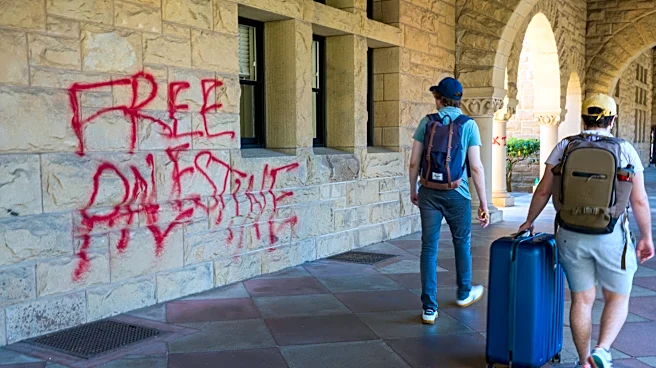
The California Attorney General's Office has announced it will dismiss charges against five current and former Stanford University students involved in a 2024 pro-Palestinian demonstration. The protesters had barricaded themselves inside the university
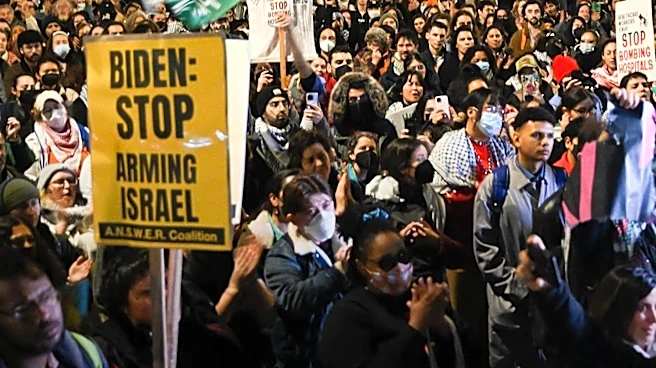
president's office, renaming it 'Dr. Adnan's Office' in honor of a Palestinian doctor who died in an Israeli prison. The charges, which included felony vandalism, will be dropped if the defendants complete 100 hours of community service each and collectively pay approximately $52,000 in restitution to Stanford University. This decision follows a mistrial in February where jurors could not reach a verdict. Initially, 12 protesters were charged, with seven having already accepted plea deals or diversion programs. The incident was part of a broader 2024 U.S. pro-Palestinian protest movement on college campuses, which saw around 3,000 arrests and demands for an end to Israeli actions in Gaza and U.S. support for Israel, as well as university divestment from companies supporting Israel.
Why It's Important?
This development is significant as it reflects a nuanced approach by legal authorities to campus protests, particularly those related to the Israeli-Palestinian conflict. The decision to offer community service and restitution instead of pursuing further trials could set a precedent for how similar cases are handled in the future, potentially influencing the legal strategies of both prosecutors and defense attorneys in protest-related incidents. It also highlights the ongoing tension between freedom of speech and assembly, and the legal consequences of disruptive protest actions. For universities, it underscores the challenges of managing student activism and the potential for property damage, while for pro-Palestinian groups, it may be seen as a partial victory, demonstrating that sustained legal pressure can lead to more lenient outcomes. The financial restitution component also emphasizes the tangible costs associated with such demonstrations.
What's Next?
The five defendants are expected to complete their community service and pay the required restitution to have their charges officially dismissed. This outcome will likely be closely watched by other universities and legal teams involved in similar protest cases across the U.S. The broader pro-Palestinian movement on college campuses may interpret this as a signal that legal avenues can be navigated to mitigate severe penalties, potentially influencing future protest tactics. Conversely, universities and law enforcement might re-evaluate their responses to campus demonstrations, seeking to balance disciplinary actions with legal processes. The case also brings attention to the role of state Attorney Generals in intervening in local prosecutorial decisions, especially in high-profile or politically sensitive matters.
Beyond the Headlines
The resolution of this case touches upon deeper societal debates regarding the limits of protest, the role of universities as forums for political expression, and the legal system's capacity to address politically charged actions. The initial felony vandalism charges and the subsequent shift to community service and restitution reflect a tension between punitive measures and restorative justice. It also highlights the increasing politicization of campus life and the challenges faced by institutions in maintaining order while respecting students' rights to protest. The renaming of the president's office to 'Dr. Adnan's Office' underscores the symbolic nature of these protests, aiming to draw attention to specific international issues and human rights concerns, thereby linking local activism to global events. This case could contribute to ongoing discussions about the appropriate legal and institutional responses to student activism in a polarized political climate.