




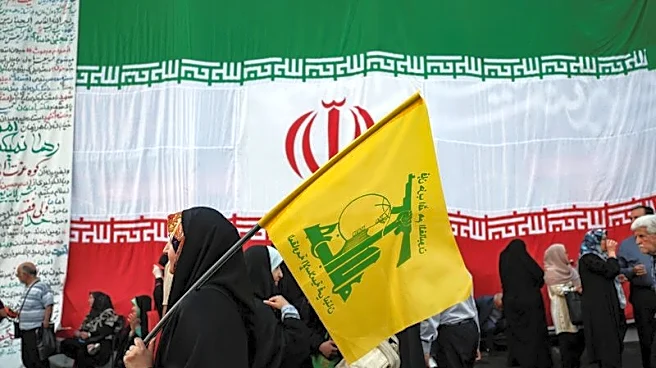
What's Happening?
The United States and Iran remain at an impasse over a potential interim peace agreement, 100 days into a conflict that has significantly impacted the Gulf region. The conflict, which began on February 28, has seen Iran and its allies launch attacks on oil
infrastructure and military installations, prompting U.S. military responses. A fragile ceasefire took effect in early April, but negotiations have stalled, particularly over the release of billions of dollars in frozen Iranian assets. The Strait of Hormuz, a critical waterway for global crude oil and LNG exports, remains a focal point of these tensions, with maritime security concerns affecting energy markets. Recent incidents include the interception of Iranian drones by U.S. Central Command, highlighting ongoing threats to commercial shipping in the region.
Why It's Important?
The prolonged conflict and stalled negotiations between the U.S. and Iran have significant implications for global energy security and economic stability. The Strait of Hormuz is a vital corridor for oil exports, and disruptions here can lead to elevated oil prices, as seen with West Texas Intermediate and Brent crude prices remaining high. The inability to reach an agreement exacerbates concerns about inflation and energy supply, affecting not only the U.S. but also global markets. The situation underscores the geopolitical complexities of the Gulf region and the challenges in balancing diplomatic efforts with military responses.
What's Next?
Without a breakthrough in negotiations, the outlook for a durable ceasefire and the restoration of Gulf energy flows remains uncertain. The U.S. and Iran must navigate complex issues, including the release of frozen assets and regional security concerns, to reach an agreement. The continuation of military incidents and the potential for further escalation could further destabilize the region and impact global energy markets. Stakeholders, including international energy companies and governments, will be closely monitoring developments, as any resolution could significantly alter the geopolitical and economic landscape.